
Campaigns PETAIndia.com
 
Action Alerts Campaigns Vegetarianism Living Media Centre About PETA Donate Now
 
Subscribe to E-News
 
 
Campaigns
Animals Used for Experimentation
Animals Used for Entertainment
Animals Used for Clothing
Vegan/Vegetarian
Deonar Abattoir
Companion Animals
Resources
Action Alerts
Activism Guide
Ads and PSAs
E-Cards
FAQs
Letter-Writing Guide
Literature
News Releases
PETA Kids
Web Banners

Animals Used for Entertainment

Riya Sen

Animals suffer horribly for the sake of human entertainment. They are beaten or starved until they learn to perform silly tricks; they are confined to small cages and deprived of all that is natural to them; they are forced to run for their lives or fight other animals to the death. Fortunately, people around the world are starting to realise that cruelty is not entertaining, and they are demanding that animal acts be banned. You can help: Perhaps the single best way to end the abuse of performing animals is to boycott circuses, dolphinaria, horse races and other similar events. When the profits disappear, so will the cruelty.

Actor and model Riya Sen has been working to urge the Mumbai government to immediately enforce a special notification issued under the Bombay Police Act on 17 April 1998, making it illegal to keep horses on the beach after watching a collapsed, exhausted and mistreated horse die.

Aquaria: Life Confined to a Bathtub

Animals in aquaria also suffer. Fish and other marine animals used to swimming freely in vast oceans are confined to small tanks in which they can swim only in endless circles. Often the tanks are barren, containing no sand, no rocks and no plants—nothing that remotely resembles the fish’s natural homes. Fish in aquaria are also subjected to the constant glare of artificial lights and droning of pump motors, and they may be confused by the glass, not recognising it as a barrier, and sustain facial injuries from swimming into it. Goldfish

Dolphinaria, marine mammal parks where dolphins and other animals are forced to perform tricks to entertain visitors, are among the cruelest displays of captive animals. Dolphins navigate by echolocation, bouncing sonar waves off objects to determine their shape, density, distance and location. In a tank, says Jean-Michel Cousteau, dolphins ‘are bombarded by a garble of their own vocalisations. … Because these are sounds of communication as well as navigation, their world becomes a maze of meaningless reverberations.’ Dolphins are highly social animals who, in their ocean homes, swim together in ‘pods’ of three to 10 individuals—or tribes of hundreds; they may swim up to 100 miles a day. Throwing dolphins into concrete tanks is like imprisoning them in virtual bathtubs. The stress of captivity also weakens dolphins’ immune systems—negating purported benefits such as veterinary care and regular meals—leading to illness or even death. At least three dolphins have died in Asia’s first dolphinarium, Mabalipuram in Tamil Nadu.

Please do not patronise zoo, aquaria and dolphinaria. If no one visits these sad displays, they will eventually be forced to close down.

Animal Races: Running to Death

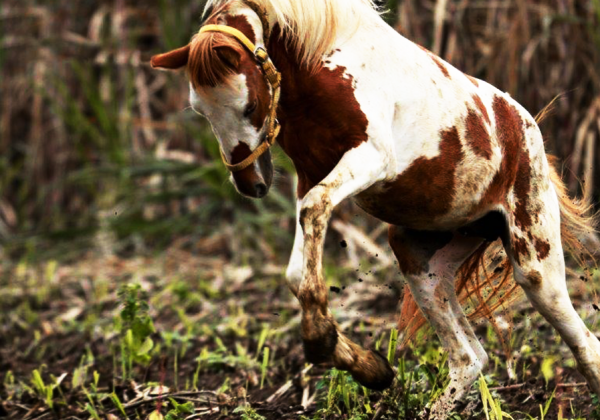
Horses, camels and other animals used in races only run at breakneck speed in their natural habitats when in danger, not for fun. In a race, they are also running in an effort to avoid danger, but the danger is usually sitting right on their backs.

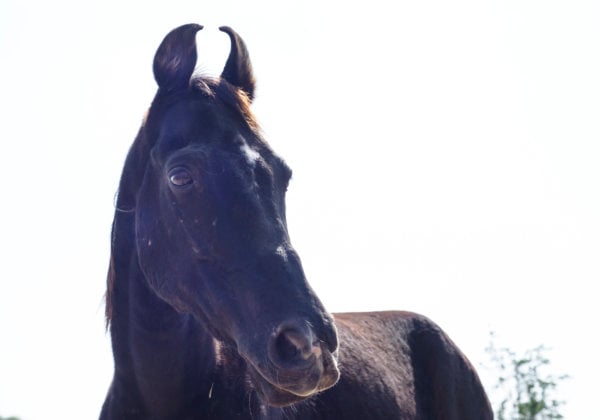
Many horses are raced before their bones and knees have fully matured. It is not uncommon for these horses to suffer compound injuries and chronic lameness or to ‘break down’ on the track. The problem is exacerbated when drugs and treatments that were designed to repair horses’ injuries and to alleviate their suffering are used instead to get them back on the track to compete. An Ohio State University study found that long-term use of one common anti-inflammatory painkiller can actually accelerate horses’ arthritic changes and the associated pain in joint cartilage.

Horses who stop winning races are often killed with a bullet to the head. Or they are ‘retired’ to research facilities that bleed them to death for the production of serums and vaccines.

Racing greyhounds suffer similar fates. On the track, injuries and illness, including broken legs, heat stroke and heart attacks, claim many dogs. Off the track, dogs are confined to cramped cages until the next race begins.

Dogs are not the only victims of the greyhound racing industry. Even though the government banned the use of hares as live bait in 1988, coursing clubs at Phagwara in Punjab continue to organise annual meets during which greyhounds chase, catch and rip apart hundreds of live rabbits.

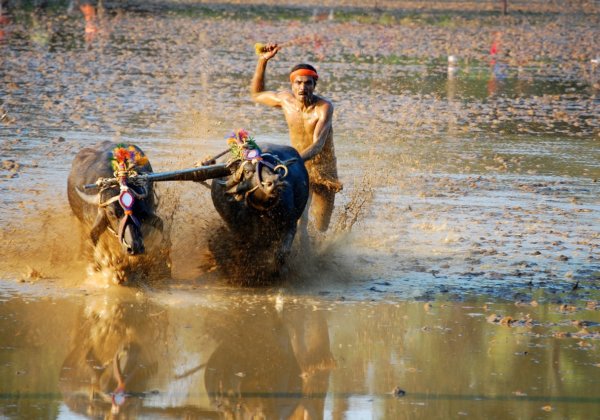
Races involving other animals, such as camels, donkeys, buffaloes and elephants, are often promoted as tourist attractions or novelties at local fairs. All too often, the animals’ welfare is of less importance than the organisers’ profits. One particularly cruel example is the camel racing held at the annual Pushkar fair near Ajmer in Rajasthan. During these races, camels are forced to carry as many as a dozen people each while they race against each other.

‘Joy’ Rides: Victims of Tourism

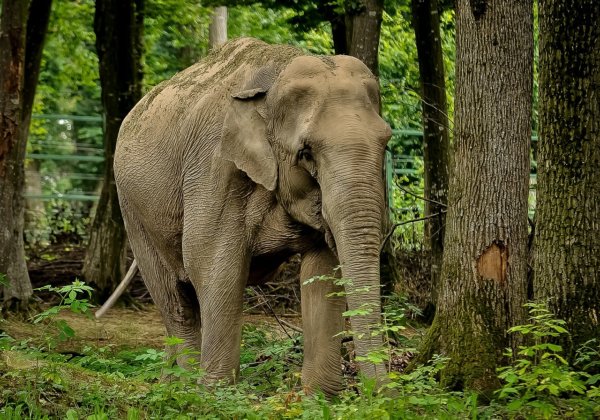
Another popular tourist attraction in India is rides using elephants, camels, yaks, ponies and other animals. For example, elephants are forced to carry sightseers to Amber Palace in Jaipur, camel safaris are popular attractions in Rajasthan, as are yak safaris in Sikkim, and other animals are used to carry visitors to tourist resorts in hilly or mountainous regions. Not only are these rides inhumane, they can also be dangerous. Because the animals are often loaded with the maximum number of adults and children they can physically hold, it is not uncommon for some riders to be thrown off. Tourists are often shocked by the conditions in which these animals are kept, and complaints are not unusual. Unfortunately, by the time complaints are made, money has usually already changed hands. It is best not to patronise such rides in the first place.

Animal ‘Actors’: Unpaid and Abused

Animals used in movies and television programmes are often treated as little more than props, and many suffer terribly behind the scenes.

There have been numerous cases of animals being severely beaten during filmmaking, and others have suffered serious injuries or even death. For example, elephants have been burned while trying to escape from staged fires. A horse was seriously injured during the shooting of Bhola Bhala after being deliberately tripped. The dog Jaani, of Parivaar fame, was killed during the filming of a glass-breaking stunt on a South Indian movie set. Filmmakers stitched the blind tiger Uma Devi’s mouth shut during the shooting of Insaaf Kaun Karega. In a similar incident, animal activists convinced the Central Board of Film Certification to censor parts of the film Betaaj Badshah after learning that a leopard’s mouth had been sewn shut. Animals featured in advertisements fare no better: A television commercial for Siyaram’s fabrics depicted a cockfight, despite the fact that cockfights are illegal in India.

Behind the scenes, animal actors are commonly corralled or caged in unfamiliar settings, exposed to all extremes of weather, and forced to interact with other animals who are not part of their herd or family, which causes hormonal disturbances and mental anguish. The manner in which animals are rounded up, transported from one location to the next and confined on the set can be upsetting, both physically and mentally.

If you see a movie or television programme that includes scenes containing possible animal abuse, speak out: Write letters of complaint to the production company or TV station. Ask companies that use animals in their advertising to switch to inanimate ‘props’.

Other Cruelties for Entertainment

KangarooThe examples above are not exhaustive. We have all seen monkeys being forced to dance out of fear of a stick and snakes who spend their short lives in tiny boxes being made to ‘dance’. We have seen fish imprisoned in glass cells in restaurants and monkeys kept in cages as ‘pets’. In some parts of India, chickens are made to fight with blades tied to their feet and pigeons are made to race. Animals are hunted and poached, and the resulting products are sold in the markets.

Since many of these abuses are illegal, you can help by documenting the cruelty in as much detail as possible, including photographing the incident if possible, and informing PETA or another animal protection organisation. In certain cases, it would be appropriate to speak to the manager of the establishment exploiting the animal or meeting with the concerned official. You can also help by not purchasing anything from those exploiting animals and by educating others not to support the abusers by giving them money.


Rodeo: Cruelty for a Buck

Greyhound Racing: Death in the Fast Lane

Zoos: Pitiful Prisons

Circuses: Three Rings of Abuse

Horse Racing: A Losing Bet

Bullfighting: A Tradition of Tragedy

Travelling Animal Acts: Shameful Shows

Marine Mammal Parks: Chlorinated Prisons

Carriage Horses: Don’t Get Taken for a Ride

Live-Animal Acts and Exhibits: Anguished '‘Entertainers'

PETA India, based in Mumbai, was launched in 2000. PETA India operates under the simple principle that animals are not ours to eat, wear, experiment on or use for entertainment, educating policymakers and the public about animal abuse and promoting an understanding of the right of all animals to be treated with respect.

In This Section
See Also
Exotic Animals Belong in the Wild, Not in Zoos
PETA.org Factsheets
Sanctuary Cub
Printer-Friendly      l      Subscribe to E-News   
Contact PETA      l      Disclaimer      l      Privacy Policy      l      PETA Web Sites   
PETA INDIA PO BOX 28260 JUHU, MUMBAI 400 049