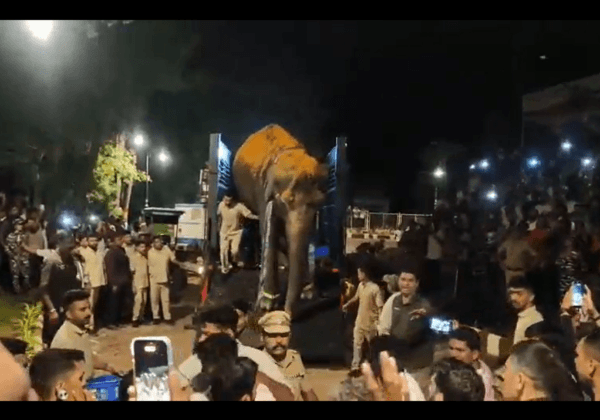


When You See an Animal in Distress …
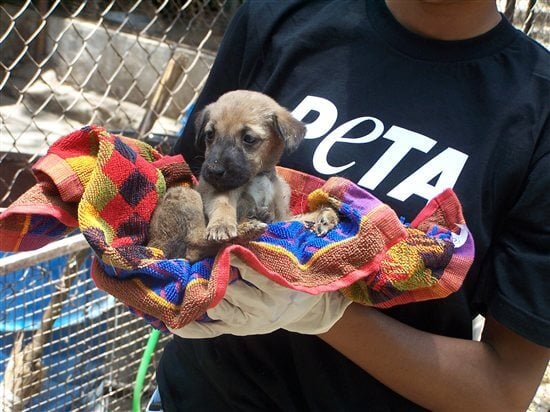
If you need to report a situation involving an animal in immediate danger, please call our emergency number: (0) 98201 22602. If an animal is injured, please remain with the animal until help is secured.
If you have witnessed an illegal act of cruelty to an animal, please document all the relevant details and file a First Information Report with the police immediately. If you have witnessed an illegal act of cruelty to wildlife, please also contact a forest officer via your state’s forest department. Their contact details can usually be found easily on the internet. Animal protection laws can be found on the Animal Welfare Board of India’s website (awbi.gov.in). Please also see this guidance [https://www.petaindia.com/blog/9-things-to-do-if-you-witness-cruelty-to-animals/].
You might also need to contact a veterinarian or animal protection group close to where you live for urgent help. If you live in India, veterinarians can be found by using the search engine at Justdial.com, and government-employed veterinarians can be found by contacting your state’s animal husbandry department. Veterinarians experienced in working with wildlife can be found through your state’s forest department. Directories of animal protection groups throughout India can be found at the links listed below. Please note that PETA has not had the opportunity to work with every group listed and cannot guarantee quality of service, so please stay with the injured or wounded animal and make sure that the animal is properly treated and tended to or put out of his or her misery, not left to languish.
Never allow an animal to remain in danger. Please contact PETA any time you need further assistance.
You can find local animal protection groups or veterinarians through the following websites:
- World Animal Net offers a directory of animal protection groups around the world.
- We for Animals provides listings of veterinarians, veterinary hospitals, animal ambulances and animal welfare organisations in India.
- People for Animals lists contact information for all its units across India.
People for Animals units
A list of state-wise Honorary Animal Welfare Officers as recognised by the Animal Welfare Board of India can be found here.
Frequently Asked Questions on PETA India’s Emergency Response Services
Q: Which animals does PETA India help through its emergency services?
A: PETA India’s free emergency veterinary and rescue services are available for injured and diseased community and wild animals (animals who do not live inside a home and have no guardian) in Mumbai and Delhi. Outside of these areas, PETA India will recommend local NGOs or other help. Due to limited ambulance services, PETA India may need to recommend external help in Mumbai and Delhi at times, too. For wild animals, PETA India will usually work with the support of forest department authorities.
Q: What if my companion animal needs veterinary care?
A: Please go to a private veterinarian/clinic if your companion animal (an animal with a guardian) requires care.
Q: May I instruct PETA India on what veterinary services to provide?
A: No. No matter how well-meaning, PETA India will not take treatment advice from members of the public just as a human doctor would not do so. Should you desire a specific treatment, please take the community animal to a private veterinarian in a well-ventilated, secure crate.
Q: Will PETA India pay for the veterinary service I have chosen?
A: No. If you have arranged veterinary services outside PETA India for a community animal, you are responsible for ensuring that animal’s care and covering veterinary costs.
Q: Will PETA India transport the animal to a facility of my choosing?
A: No. Once PETA India picks up an animal, he or she will be cared for in accordance with PETA India’s protocols.
Q: How many calls does PETA India receive?
A: PETA India’s emergency helpline receives an average of about 1,400 calls per day India-wide.
Q: Can PETA India provide reports/updates on cases?
A: To ensure our limited resources are focused on addressing emergencies, PETA India is not in a position to provide reports, medical reports or running updates on cases. However, we will endeavour to give a basic update to the original reporter of the case where requested.
Q: Does PETA India treat animals yourselves?
A: PETA India’s veterinarians and veterinary assistants often do treat animals ourselves, especially where animals can be treated on the spot.
Q: Where does PETA India take rescued animals who require hospitalisation or more extensive care?
A: PETA India uses a network of partner clinics and NGOs based on availability and urgency.
Q: Why doesn’t PETA India share partner clinic/NGO details?
A: Given the volume of calls, PETA India’s partners do not have the capacity for public follow‑ups (calls/visitors/visits) and have asked that details not be shared so they may remain focused on helping animals in need. Please keep communication with PETA India, and we will do our best to help you.
Q: What if the animal does not survive—can PETA India release the body to the public?
A: Because PETA India handles diseased, dying, or injured animals, where an animal does not survive, PETA India must handle the situation in a way that protects public safety and prevents the spread of infectious organisms/disease. We are not permitted to hand bodies to members of the public.
Q: What should I do to give the animal the best chance of survival?
A: Please report emergencies as soon as you see them and do not wait. PETA India endeavours to save lives, but we commonly deal with extreme accident cases and advanced stages of disease, and we can only do our best.
Q: What if an animal does not survive?
A: We understand your concern and distress. We do our best, however, please also be aware that some serious conditions may not be obvious at first glance—for example, internal bleeding—but can still be life‑threatening.
Q: How fast will an ambulance arrive?
A: PETA India must prioritize by emergency level. If the animal is in Mumbai or Delhi, we will get to you as soon as we can and will try to provide an estimated time of arrival or we will recommend other NGOs closer to you.
Q: What if I’m outside Mumbai or Delhi?
A: Outside of these places, we will direct you to local help. Please call us back if the contacts we provide do not help and please be aware they are external to PETA India.
Q: Can PETA India guarantee the quality of every group it recommends?
A: PETA India has not had the opportunity to work with everyone and cannot always guarantee quality of service as a result. Please call us back if the contacts we provide do not help.
Q: What if the community animal PETA India released back cannot be found?
A: Sadly, community animals are often the victims of road accidents and other mishaps. PETA India is unable to monitor the animal beyond the return.
Q: Why are you not releasing the animal you picked up?
A: PETA India will not release animals who will struggle to survive on their own back onto the street. If the injury or disease is that extensive, yet the animal is in a state to survive, PETA India may get the animal adopted, the animal may still be hospitalised, or a sanctuary or other provision may be made. Similarly, PETA India will not release puppies and kittens back on the road.
Q: What else can I do to help community animals?
A: You can help community animals in many ways including reporting crimes against them per the relevant advice above, putting out clean water bowls, choosing to adopt from a shelter or the street instead of buying an animal, supporting sterilisation efforts, joining feeding efforts and volunteering and donating to animal protection NGOs.