

Troop of ‘Monkeys’ from PETA India and Aashray Foundation Plead for Rhesus Macaque Protection to be Reinstated Under Wildlife Protection Law
Following the removal of protections that had been afforded to rhesus macaques (Macaca mulatta) for over 50 years under the Wild Life (Protection) Act, 1972 (WPA), supporters of PETA India and the Aashray Foundation gathered at Jantar Mantar wearing giant monkey masks and Personal Protective Equipment (PPE) kits. The troop of “monkeys” aimed to urge the Ministry of Environment, Forest and Climate Change (MoEFCC) to reinstate rhesus macaques as a suitably protected species under the WPA, 1972, and grant them the highest protection afforded to many other indigenous species under Schedule I. The removal of rhesus macaques from Schedule II of the WPA following the Wildlife (Protection) Amendment Act, 2022, has raised critical concerns regarding their welfare.
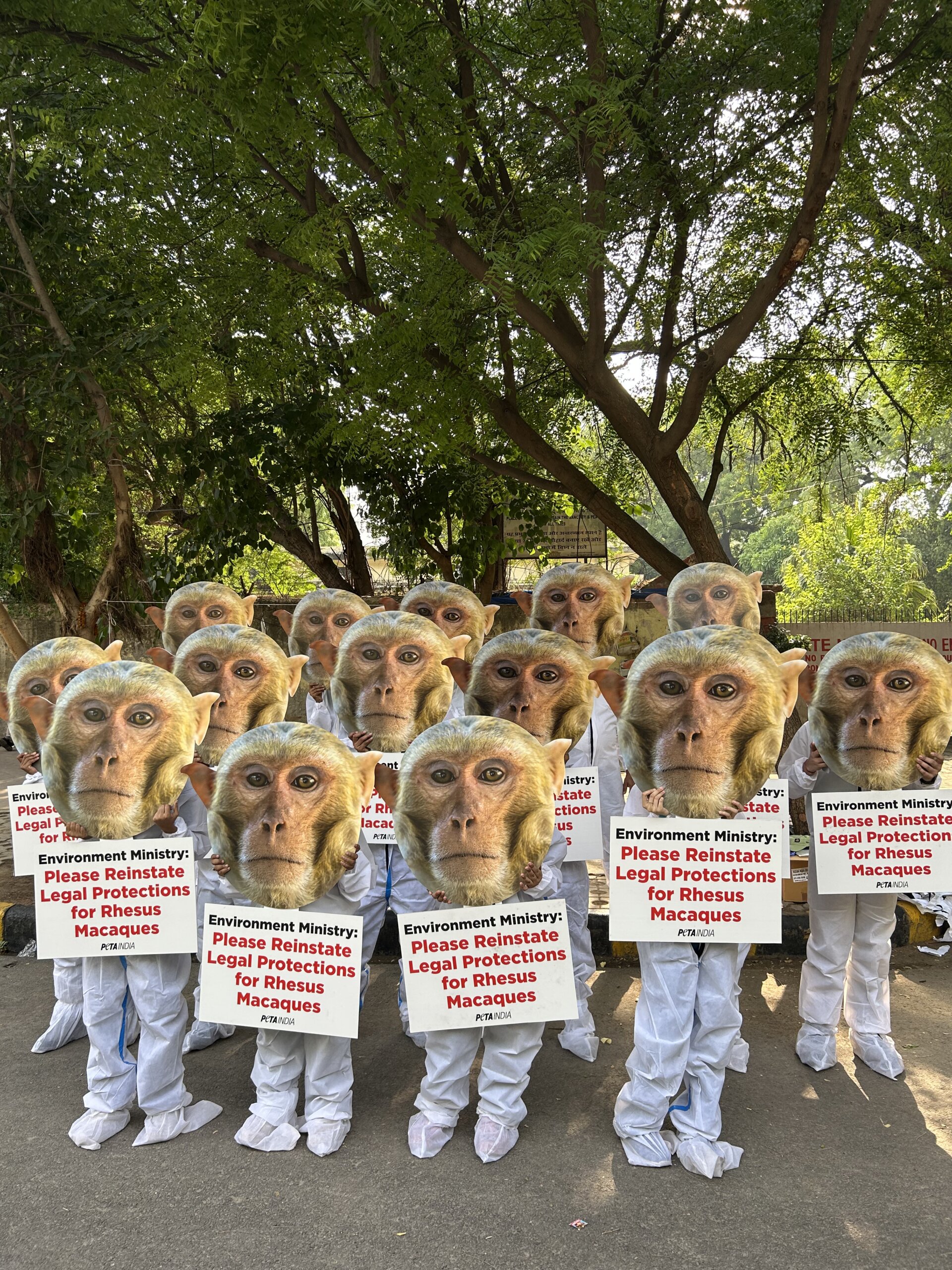
PETA India has sent a letter to Prime Minister Modi, raising concerns over evidence that unscrupulous foreign monkey importers were reportedly hoping to pillage India’s rhesus macaque population for use in laboratories. In fact, an office memorandum published by the Wildlife Crime Control Bureau (WCCB) on 11 May 2022 highlighted possible attempts by the Laboratory Corporation of America Holdings to export vulnerable live monkeys from India for use in experimentation. In response, the WCCB alerted its field formations to the situation to prevent the illegal export of primates from India.
View this post on Instagram
In March last year, PETA India, along with 30 other wildlife and animal protection groups—including Wildlife SOS, RESQ Charitable Trust, Conservation Action Trust, Wildlife Welfare Association, and the Federation of Indian Animal Protection Organisations—sent a letter urging Hon’ble Minister of Environment, Forest and Climate Change Bhupender Yadav to reinstate protections for rhesus macaques under the WPA, and to, in fact, grant them the highest protection, afforded to many other indigenous species, under Schedule I. In May last year, more than 60 leading primatologists and wildlife experts joined PETA India in sending a letter making a similar plea to Minister Yadav.
In November last year, the Standing Committee of the National Board for Wildlife (NBWL) recommended the re-inclusion of the rhesus macaque under Schedule II of the WPA. PETA India previously wrote to the Board in July 2024. However, no consequential action has been taken to date.
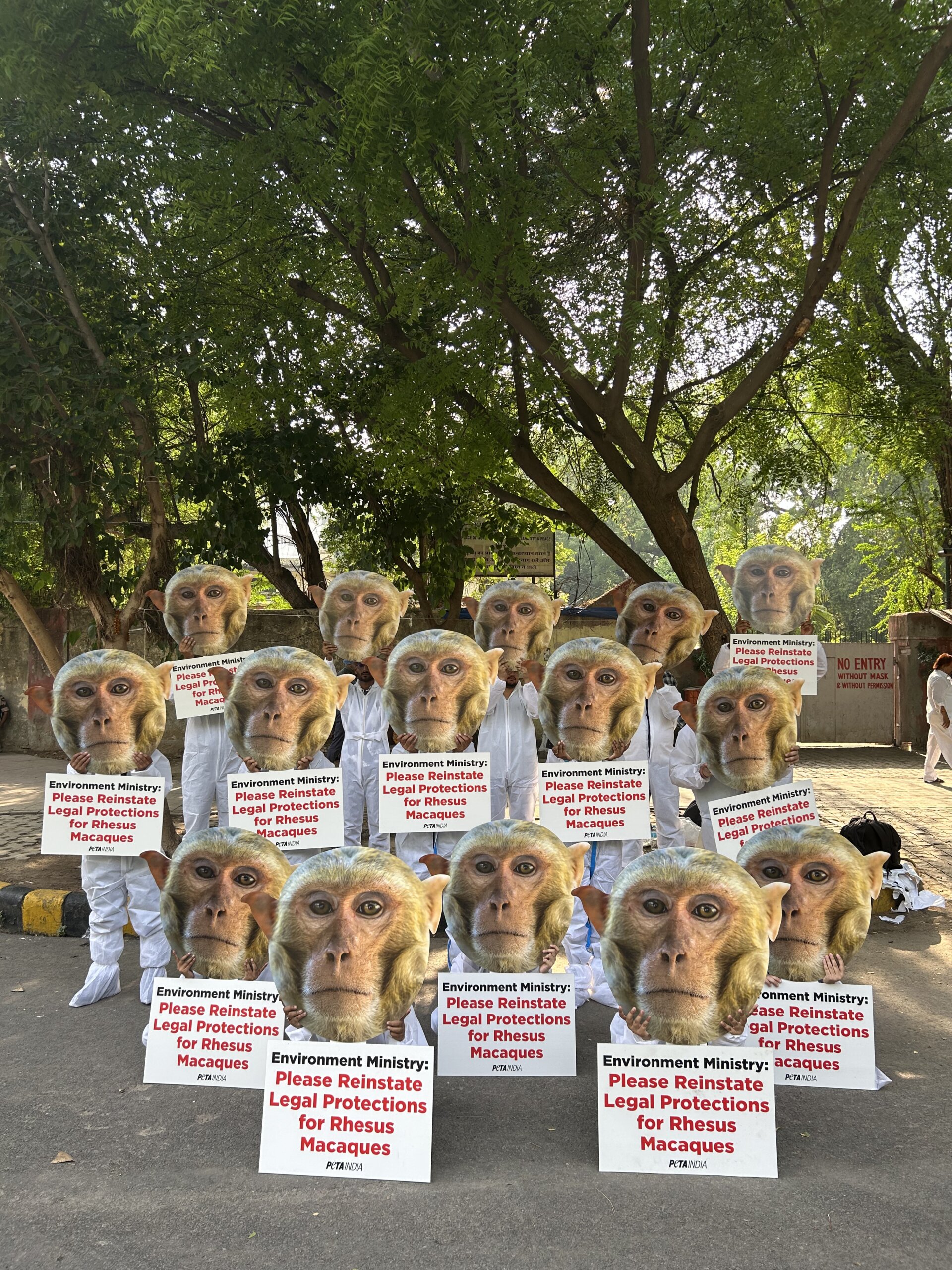
In addition to being revered in Hinduism, rhesus macaques fulfil an important role in local ecosystems by dispersing seeds – due to their frequent consumption of fruit – and their absence can be detrimental to forests. Monkeys taken from their natural habitats by wildlife dealers are often crammed into small wooden crates and transported in the dark, terrifying cargo holds of planes for as long as 30 hours. The stress of capture and transportation can weaken their immune systems, increasing the risk of spreading zoonotic diseases in India and around the world. In laboratories, monkeys are typically confined alone to small metal cages and tormented in experiments in which they’re cut open, poisoned, crippled, forced to become addicted to drugs, electroshocked, and killed. Rhesus macaques are also abused for street performances and as pets, and killed for meat.
Help Save India’s Monkeys Now!