

PETA Scientists’ Win Helps Replace the Use of Animals
While antibodies derived from the bodies of animals continue to cause trouble in the research world, PETA scientists aren’t only finding animal-free solutions, they’re winning awards in the process!
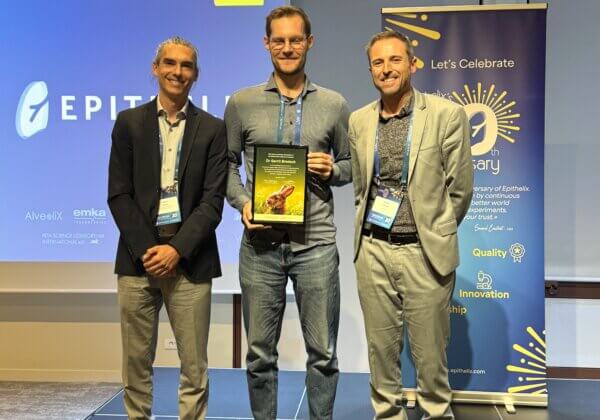
PETA scientists, along with other members of a multidisciplinary team, received an award from the US National Institutes of Health (NIH)–the United States’ main public funder of research, and one of the largest research funders in the world. It is roughly similar to India’s Indian Council of Medical Research (ICMR), Department of Biotechnology (DBT), and parts of the Council of Scientific and Industrial Research (CSIR)—if they were all combined into one organization. The NIH’s ‘Replication Prize’ received was for work to solve a colossal problem with animal-derived antibodies: reliability.
What Are Antibodies?
Antibodies are essential tools for detecting viruses, bacteria, and other molecules in research. But a research tool in science requires consistent, predictable performance. Each batch of antibodies taken from animals’ bodies, even from the same individual, differs from the next, which can lead to unexpected or undesirable outcomes. A prominent study found that nearly one-third of antibodies don’t do what they’re supposed to: stick to very specific molecules.
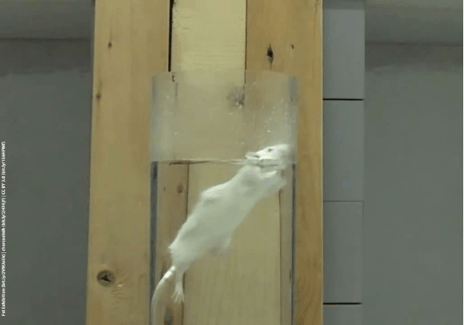
Despite their unpredictability, millions of animals, including rabbits, mice, rats, goats, sheep, llamas, cows, and horses, are used each year as living factories to produce antibodies. In 2016, PETA India revealed that thousands of horses in India are bled to make antibodies used in antivenom drugs. Many horses suffer from anaemia, diseased hooves, eye abnormalities, infections, parasites, and malnutrition while being forced to live in crowded, filthy enclosures without adequate veterinary care.
Recombinant antibodies are considered superior to antibodies derived from animals because they are sequence-defined (generated from a known DNA sequence) and are infinitely reproducible. They have a strong ability to stick to their intended target and perform reliably from batch to batch.
How PETA Scientists Are Changing Antibody Research for the Better
PETA scientists and collaborators earned recognition and a cash award from the US NIH for advancing non-animal antibodies using “recombinant” technology. The collaborative team focused on three key avenues for antibody innovation: help create new, high-quality non-animal antibodies, make them accessible for scientists to buy and use, and teach students and researchers about the benefits of non-animal antibodies.
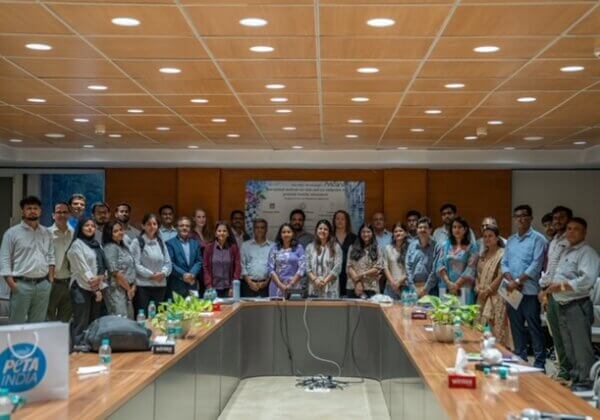
For years, PETA India has worked with government agencies to advance animal-free antibodies. For example, in 2021, the Indian Pharmacopoeia Commission (IPC) took recommendations from PETA India to propose policies that significantly reduce tests on animals during the production of recombinant antibody drugs.
In addition, PETA Science Consortium International e.V. (the Science Consortium) – of which PETA India is a member – funded a project that led to the creation of fully human-derived antibodies capable of blocking the toxin that causes diphtheria that could be used to replace the existing diphtheria treatment that’s produced using horses.

What’s Next for Animal-Free Antibodies
Leading scientists agree that replacing animal-derived antibodies must happen now. Thankfully, researchers can use animal-free antibodies in all applications where animal-derived antibodies are currently used.
To help with this change, funding is needed from organizations such as India’s Indian Council of Medical Research (ICMR), Department of Biotechnology (DBT), and the Council of Scientific and Industrial Research (CSIR).
With PETA India’s help, the shift toward recombinant antibody production is advancing, and PETA scientists are working to replace the use of animals with more humane and reliable non-animal approaches.
What You Can Do
Now is the time for India to reaffirm its role as a world leader in biomedical research and regulatory testing by embracing the change to human-relevant models that will help bring desperately needed treatments, cures, and vaccines. Join PETA India scientists in their efforts to advance state-of-the-art science!