

PETA India Scientist Takes to Podcast to Talk About the Future of Animal-Free Science
What’s in store for the future of science? What would it take for India to become the global leader in non-animal testing? What’s the best caffeinated beverage to sip on while writing a research paper? SnailShow Podcast host Amit Khare sat down with PETA India scientist Dr. Ankita Pandey to explore all these questions and so much more!
While the discussion touched on everything from innovation to sustainability, the stark reality of failed tests on animals drove the conversation. Dr. Pandey explained that many drugs that have passed tests on animals fail when those treatments reach human clinical trials, including in fields such as Alzheimer’s disease, cancer, and stroke research. These clear shortcomings have driven much of the science world towards sensible human-relevant approaches.
“We are trying to make science smarter by combining a lot of different approaches that can give information about human biology.” Dr. Pandey stated.
Humans aren’t the only animals that benefit from animal-free innovations. As Dr. Pandey points out, over 100 million animals are used every year in testing. These animals often live their lives in barren cages, have chemicals applied onto sensitive body parts like their eyes and skin, or are intentionally infected with diseases.
Thankfully, technology already exists to replace many tests on animals. One exciting example Dr. Pandey highlighted is the use of 3D organoids: tiny laboratory-grown structures created from human cells that mimic human organs and tissues. Researchers can use these advanced models to study how drugs and chemicals affect the human body without conducting painful procedures on animals.
PETA India scientists have been at the forefront of promoting these kinds of innovative approaches, and their work extends far beyond the laboratory. On any given day, as Dr. Pandey described it, she may be lecturing at conferences, developing recommendations on human-relevant testing, or sitting across from other scientists “convincing them why a human cell may be better than a mouse.”
“There’s never been a more exciting time to be a toxicologist,” said Dr. Pandey.

India has already made great strides in banning tests on animals, including a ban on cosmetic testing that’s been in place since 2014. Dr. Pandey also noted that non-animal methods have already been incorporated into India’s 2017 and 2023 guidelines for pesticide testing, demonstrating the country’s willingness to align with the latest growing international practices.
According to Dr. Pandey, developing new methods is no longer the biggest barrier. “The science is established. We have Indian labs that are capable of using these non-animal methods.” The next challenge is building familiarity and confidence so that industry and regulators routinely use and accept these non-animal approaches.
As Dr. Pandey noted, introducing new methods often means asking scientists to rethink practices they have relied on for decades. “You are basically questioning what they have learned their entire lives,” she said.
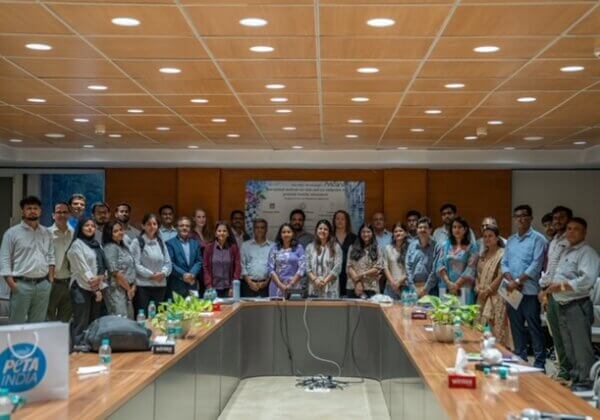
In a recent paper, Dr. Pandey (most likely drinking tea, her preferred research-accompanying beverage), along with industry and government experts, investigated India’s regulatory requirements for testing pesticides on animals and the current flexibility to submit non-animal methods. They also analysed other countries to identify steps these nations may have taken that advanced animal-free science. The paper provides recommendations for policy initiatives that regulatory bodies, such as the Central Insecticides Board and Registration Committee (CIB&RC), can take to accelerate the use of non-animal methods.
As Dr. Pandey says of tests on animals, “We can’t turn a blind eye to the limitations, whether it’s scientific, whether it is ethical, or whether it is economic…There’s no other field where overwhelming failure is accepted. It is the responsibility of each and every scientist and regulator to evolve with time.”
We’re seeing India’s evolution in real time. It’s undeniable that embracing the best science for humans, animals, and the environment aligns with the nation’s Viksit Bharat. When asked what’s in store for India’s future, Dr. Pandey replied, “I’d say a global leader of science and innovation.”
Help Create India’s Future of Animal-Free Science
India is entering a new era of scientific innovation, where state-of-the-art technology, human-relevant non-animal methods, and compassion can shape the future of pesticide toxicity assessment. But scientists need your help to get there!
Urge the Authorities to Prioritise Non-Animal Methods for Pesticide Toxicity Testing