

How India Is Helping to Spare Animals from Deadly Inhalation Tests
Another win for animals! A new study co-authored by PETA scientists and collaborators used a laboratory-grown human airway model — rather than animals — to assess the inhalation toxicity of two chemicals.
The human cell-based test method used in this study was also fed into an international, multi-laboratory effort funded and coordinated by PETA scientists. A laboratory from Gujarat was one of the participating laboratories, alongside labs in the United States, the United Kingdom, and Switzerland. Each laboratory tested about 20 chemicals using laboratory-grown tissues derived from human cells to show how inhaling certain chemicals might affect human lungs.
Before pharmaceuticals, pesticides, and other products are bought and sold, regulatory agencies require testing to assess their potential toxicity to humans and the environment. Millions of animals are used in these tests each year, many based on methods developed decades ago.
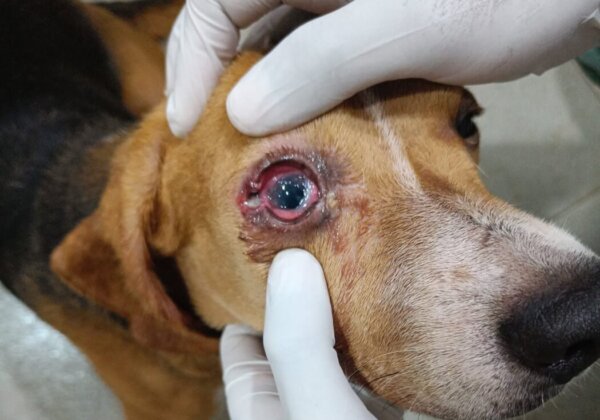
In inhalation tests, animals–most commonly rats–are restrained in narrow tubes and forced to breathe in chemicals each day before being killed. These tests fail to reliably predict chemical effects in humans because rat lungs work differently from human lungs.
Over years of effort, PETA scientists and collaborators developed this non-animal method to test how chemicals affect human lungs. One that’s based on human biology. Some of the remarkable tools used by scientists once seemed right out of science fiction but are now a reality. The method uses a laboratory-grown human airway tissue model containing mucus-producing cells and tiny hair-like structures called cilia that beat rhythmically, much like those in real human airways.
This multi-laboratory study aims to establish a new norm for inhalation toxicity testing. In August, the method was accepted as a project proposal for consideration within the Organisation for Economic Co-operation and Development (OECD) Test Guideline Program. This organization of 38 member countries sets worldwide standards for chemical testing. While additional testing, analyses, and documentation are still required, this progress signals interest and the potential to reduce animal testing worldwide. Over the coming years, PETA scientists and other experts will continue to advance this work.
Give Animals Room to Breathe by Supporting Compassionate Science
From organising free workshops, webinars, and training opportunities for scientists to improving and implementing non-animal test methods at the regulatory level, PETA India scientists advance science that benefits all living beings. But there’s still work to do. Join PETA India in promoting state-of-the-art science!
Act Now to Replace the Use of Animals in Experiments!