

Blood on Their Hands: PETA India’s ‘Beagles’ Urge Immediate Rescue of Over 1,200 Animals Imprisoned at Palamur Biosciences
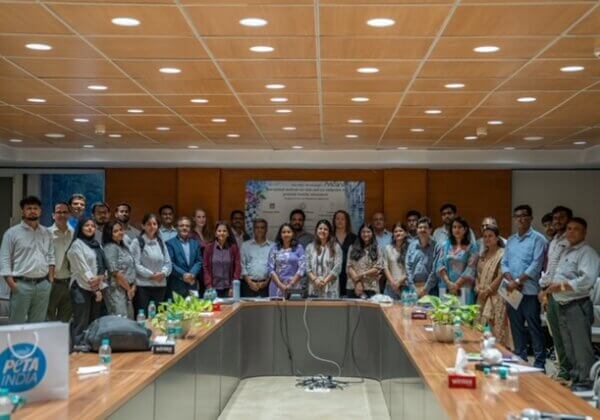
Following an explosive whistleblower-led exposé by PETA India that revealed egregious abuse of dogs, monkeys and other animals at Telangana-based Palamur Biosciences, a group of PETA India supporters from Glendale International School, Vegans of Telangana and Deven’s Hope Society wearing beagle masks raised ‘bloodied’ hands appealing to the Committee for the Control and Supervision of Experiments on Animals (CCSEA) to facilitate the rescue of the 1200+ animals including beagles, monkeys, cows, pigs and others at Palamur Biosciences. The rescue of all 1200+ from the facility was a recommendation made in a detailed report by CCSEA-appointed inspectors submitted to the agency on 17 June, yet it has still not been acted upon.


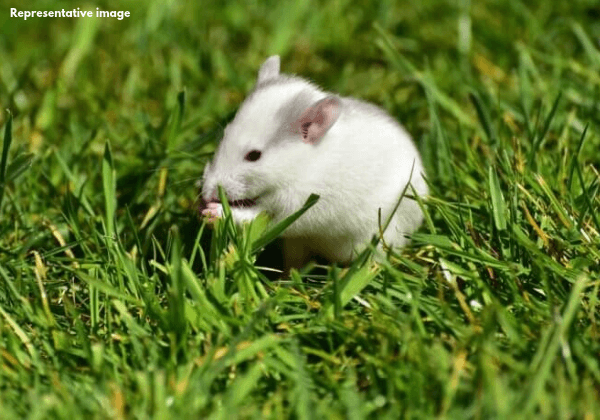
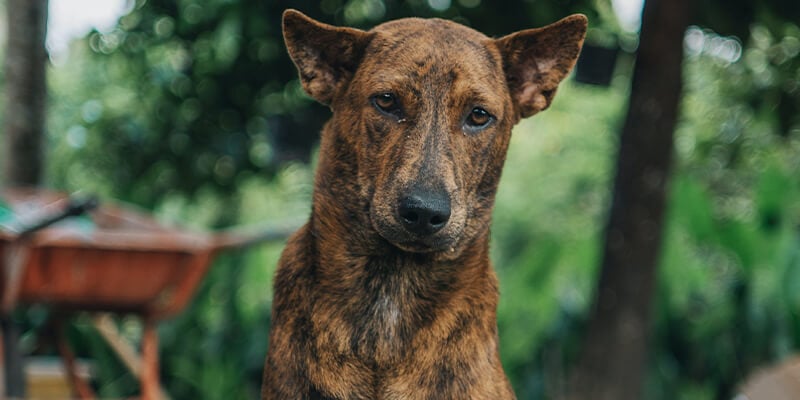
Among the animals imprisoned at Palamur Biosciences are 73 beagles who are no longer used for breeding or experiments, that the facility itself has marked as for ‘rehabilitation’, but that so far the CCSEA has not ordered to be rescued and that Palamur Biosciences has refused to let go despite offers from NGOs to facilitate the dogs’ care, rehoming and adoption into loving homes.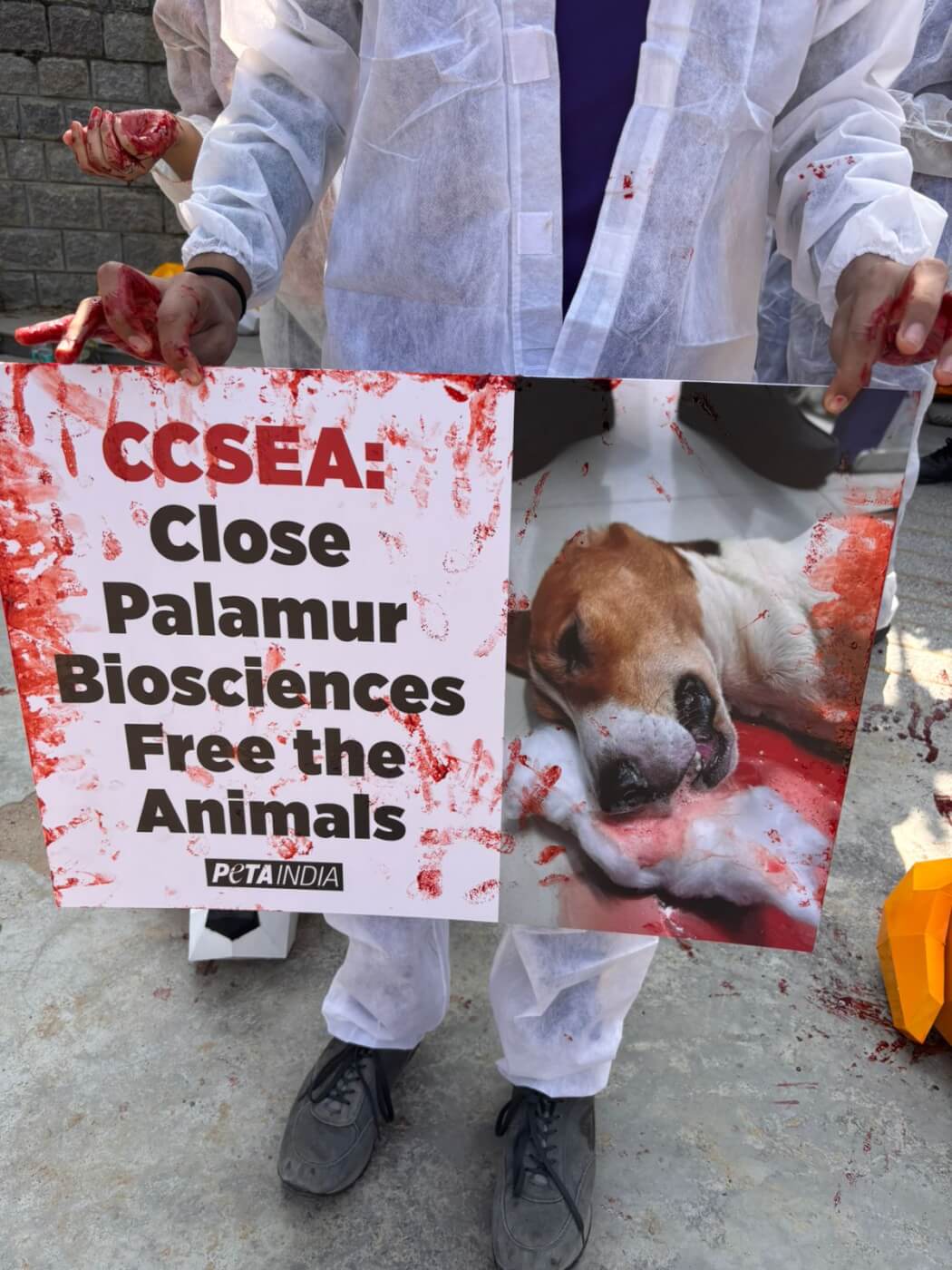 At Palamur Biosciences, dogs with treatable conditions are reportedly killed, wild monkeys who have been abducted from their forest homes are experimented on, and pigs are poisoned. PETA India is calling on CCSEA to shut down this house of horrors and to facilitate the rescue of its surviving animals who desperately need care.
The CCSEA-appointed inspectors’ report submitted to the agency on 17 June documented that the facility confined far more dogs than were approved by CCSEA and couldn’t provide an inventory of any animals; animals were reused frequently in painful experiments in violation of CCSEA guidelines; dogs, minipigs, and cows were in poor condition, yet Palamur could provide no suitable medical records; animals were experimented on without adequate pain management procedures; and animals were killed without first being sedated; and other examples of cruelty and mismanagement. The report concludes, ‘The operational deficiencies observed at the Palamur Biosciences are not isolated incidents but indicative of entrenched structural, procedural and ethical failures. The scale and severity of non-compliances documented during the inspection raise significant concerns regarding the facility’s adherence to established standards of animal welfare and regulatory accountability.’
Help Save Animals Suffering At Palamur Biosciences Now!