

After Mother and Elephant’s Death at Dubare Elephant Camp, PETA India Urges Centre to Ban All Close-Contact Elephant Tourism Activities
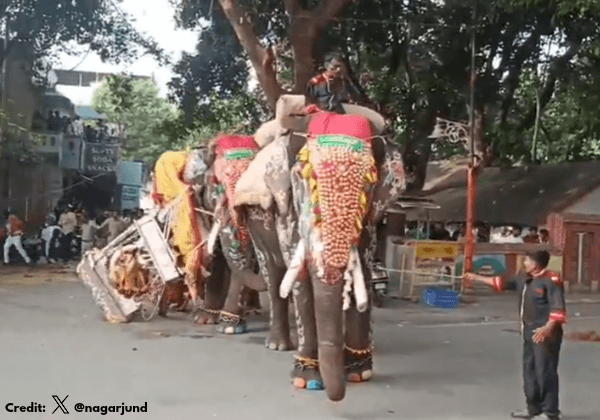
Following the recent deaths of a tourist and an elephant at Karnataka’s Dubare Elephant Camp during a bathing session with the tourists, the fatal attack on a mahout by a captive elephant at Uttar Pradesh’s Dudhwa Tiger Reserve and other incidents, PETA India has written to the Union Minister of Environment, Forest and Climate Change (MOEFCC) Minister Shri Bhupender Yadav urging an immediate nationwide prohibition on elephant rides, bathing experiences, selfies and other close-contact tourist activities involving captive elephants as they jeopardize the safety of both elephants and humans and to promote ethical, observation-based tourism focused on free-ranging elephants in the wild.
View this post on Instagram
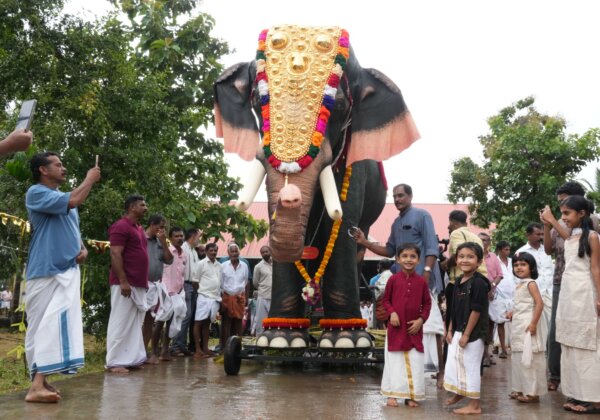
The letter highlights that lifelike mechanical elephants are a humane, safe, and practical alternative to exploiting live elephants. Capable of moving their eyes, ears, tail, and trunk and mounted on a wheeled base, these innovative, proven models are already being used by temples across India, while Kerala Tourism has introduced a mechanical elephant safari at Thamboormozhi Butterfly Park – demonstrating that tourism and cultural experiences can remain immersive and memorable without using live elephants. A mechanical elephant was also recently used at a wedding in Bangalore, a move that was celebrated by Swami Baba Ramdev.
PETA India points out that captive elephant attacks on tourists are routine. In February 2024, while giving rides at Amer Fort, an elephant named Gouri reportedly grabbed a tourist in her trunk and threw her to the ground, causing serious injuries. The same elephant had earlier attacked a local shopkeeper outside Amer Fort. In 2019, fighting between elephants carrying tourists at Amer Fort created further risk to public safety. According to the Heritage Animal Task Force, captive elephants killed 526 people in Kerala alone over a span of 15 years.
Elephants in captivity, including those used for tourism, are typically controlled through fear and physical punishment. Sharp weapons are always kept nearby and the animals are chained for long periods when not in use. When elephants attack humans, beatings and other punishments typically follow, which only make the animals more frustrated and upset.
Internationally, the Indonesian government has banned elephant rides nationwide. In 2023, the United Kingdom passed the Animals (Low-Welfare Activities Abroad) Act, creating a framework to stop UK companies from selling or advertising overseas animal attractions—such as elephant rides—that involve cruelty. Public sentiment and industry trends are also moving away from exploitative elephant attractions. A 2022 global poll found that 84% of respondents believed tour operators should not sell activities that cause wild animal suffering, while 79% said they would prefer to see animals in the wild rather than in captivity if given the chance. Tripadvisor has also announced that it would no longer sell tickets to elephant rides and certain other wildlife attractions, while more than 250 travel companies worldwide have pledged not to promote elephant rides and shows.