

Delhi University Students Win PETA India Award for Turning Banana Peels into Leather to Save Cows & the Earth
Ahead of International Youth Day (12 August), a Youth Changemakers for Animals Award was awarded by PETA India to a group of students from Delhi University’s Ramjas College in recognition of their development of an eco-friendly vegan leather made from discarded banana peels – an innovation that helps spare cows and other animals from being slaughtered for their skins and helps the planet.
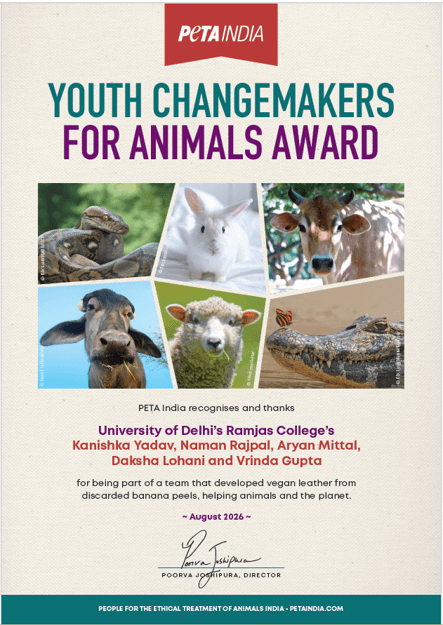
The student members of Enactus Ramjas—a group of dedicated and driven students who share the common aim of creating a better, more sustainable world and seek to uplift communities through entrepreneurial action—spent near a year developing banana-peel vegan leather. This durable, flexible material gives food waste a second life.
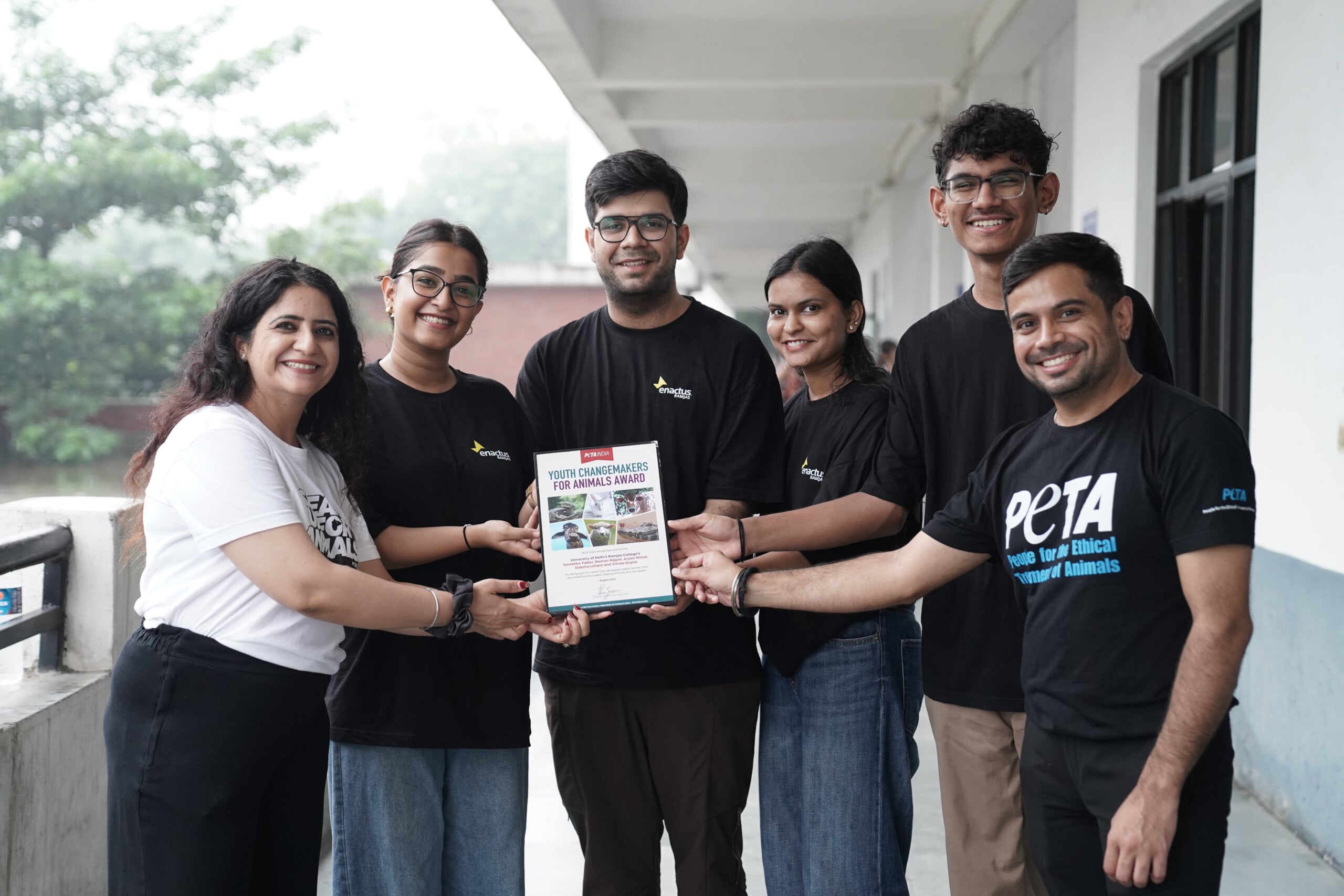
“We’re grateful to PETA India for recognising our work. The poor conditions endured by cows and buffaloes during transport and in slaughterhouses deeply affected us and inspired us to look for a compassionate alternative to animal leather. At the same time, through our work in waste management, we saw the environmental challenges posed by discarded fruit peels. Bringing these concerns together led us to create Sehar, a durable vegan leather that transforms waste into something valuable while helping spare animals from suffering.” – Kanishka Yadav, President, Enactus Ramjas
Animals used for leather in India are often crammed into vehicles in such large numbers that many become severely injured or die en route. They are then dragged into slaughterhouses, where they are cut open in full view of one another on floors covered with faeces, blood, guts, and urine.
Leather production also wreaks havoc on the environment. Turning animals’ skins into leather requires massive amounts of toxic chemicals, and runoff from leather tanneries poisons local waterways. Leather production is also harmful for those who live near and work in tanneries. In Bangladesh’s leather tanning area, 90% of leather tannery workers die before the age of 50.
Luxurious synthetic vegan leathers are widely available, and nowadays, leather is increasingly also made from pineapple leaves, cork, various fruit waste, recycled plastics, mushrooms, mulberry leaves, teak leaves, coconut waste, tomato composite, and more. Animal-free leathers are also good for Indian farmers, as the state of Meghalaya has shown by considering pineapple leather production.