

PETA India Advances Non-Animal Tests for Medical Products
At the Life Science Regulatory Summit 2026, organised by Merck, a PETA India scientist presented on how to use human-relevant methods to test medical products for pyrogens without killing animals. The event, filled with valuable insights from a dynamic community, drew regulatory professionals and industry experts from the US, Europe, and Asia.
What Is Pyrogen Testing?
Before many medical products, such as pharmaceuticals, biologics, vaccines, and medical devices, can be sold, manufacturers must show that they’re free from fever causing substances known as pyrogens. Because the human immune system is so sensitive to these fever-causing substances, they pose a serious health hazard if medical products contaminated with pyrogens are injected or implanted into our bodies.
In one type of pyrogen test, rabbits are injected with drugs or other substances and restrained while their bodies are monitored for changes in temperature. In another, horseshoe crabs are captured, drained of 20 to 30 percent of the crab’s total blood volume, and, if they survive the procedure, returned to the sea.
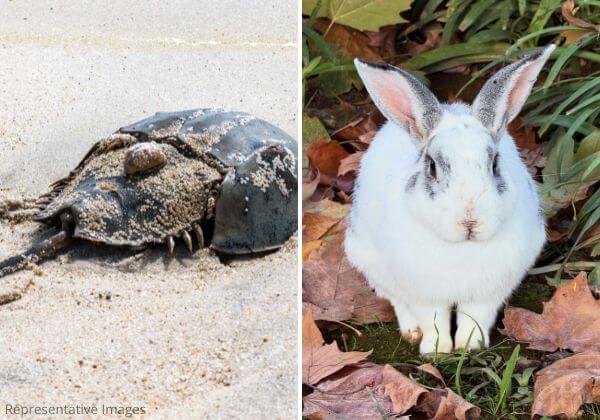
Both methods have undeniable challenges including ethical concerns over using animals, inconsistent results, gaps in their detection capabilities, and pose a direct threat to horseshoe crab populations. Perhaps the most glaring shortcoming is that rabbits, horseshoe crabs, and humans respond differently to all types of pyrogens. The unreliability of animal tests has driven scientists to adopt animal-free pyrogen testing methods that provide broader detection and greater consistency.
A Better Way to Detect Dangerous Contaminants
The most accurate way to measure pyrogenicity in humans is to use a test that mimics the human response to pyrogens. Non-animal pyrogen test methods are reliable with faster turnaround time in detecting a broad range of pyrogens.
At the summit, PETA India presented on the Monocyte Activation Test (MAT), which uses cells from donated human blood to detect pyrogens by measuring the immune response of human cells when they’re exposed to a test substance.
Moving India Past Using Animals in Pyrogen Tests
Regulatory authorities worldwide, including the European Pharmacopoeia Commission and the U.S. Food and Drug Administration (FDA), have already mentioned MAT as an effective option for pyrogen testing in their regulatory guidelines.
For years, PETA India has been working to help India make the transition to non-animal pyrogen testing possible. At the summit, PETA India presented on PETA India’s efforts to support the inclusion of animal-free methods in national testing guidelines and emphasised that meaningful change requires scientific dialogue and collaboration among regulators, researchers, and industry leaders.
Recently, PETA India led a consensus-building meeting that brought together scientists, regulators, and industry leaders to strategise how India can advance the use of the non-animal pyrogen testing. And this is only the beginning. Through collaboration, PETA India will continue to build momentum for a future in which animal-free pyrogen testing is the gold standard.
Help Create an Animal-free Future for Science
Science is better off leaving animals alone and embracing reliable and human-relevant tools. Let’s help spread the message!
Join our Call for a Strategy to Advance Animal-free Science!