

Mumbaikar ‘Pigeons’ Urge Fellow Mumbaikars and BMC to Be Kind to Them in PETA India Appeal
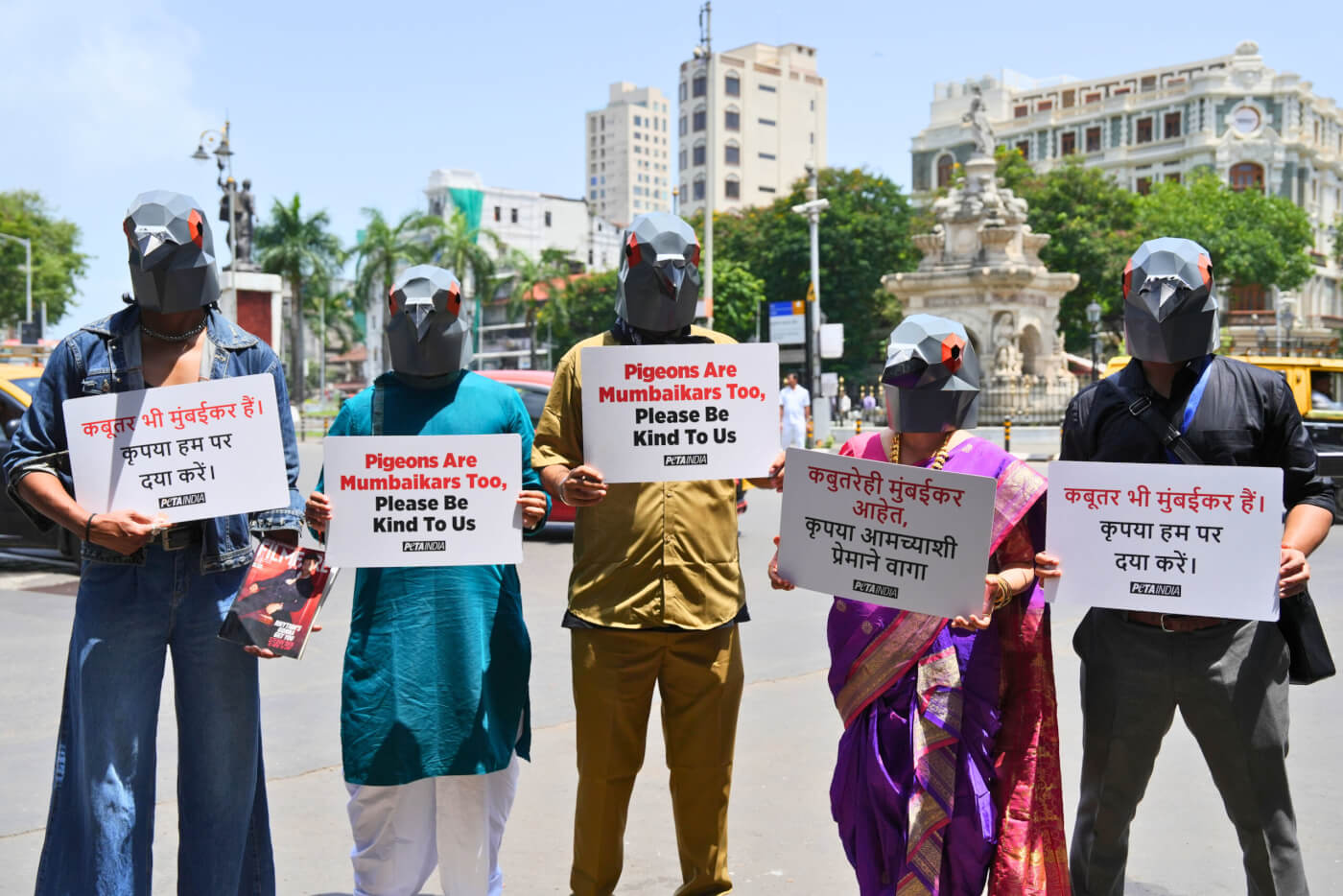
Following the recent ban on feeding pigeons and the shuttering of age-old kabutarkhanas by the Brihanmumbai Municipal Corporation (BMC), five PETA India supporters in geometric pigeon masks and dressed as quintessential Mumbaikars—ranging from auto driver, to Bollywood fan, to woman in Navari saree, office goer and man in a kurta and dhoti—held signs that read, “We Are Mumbaikars Too, Please Be Kind to Us.” These “pigeons” gathered in front of the Flora Fountain on 9th September appealing for the pigeon feeding to continue. The action aimed to highlight that pigeons are members of our community and should not be left to starve.
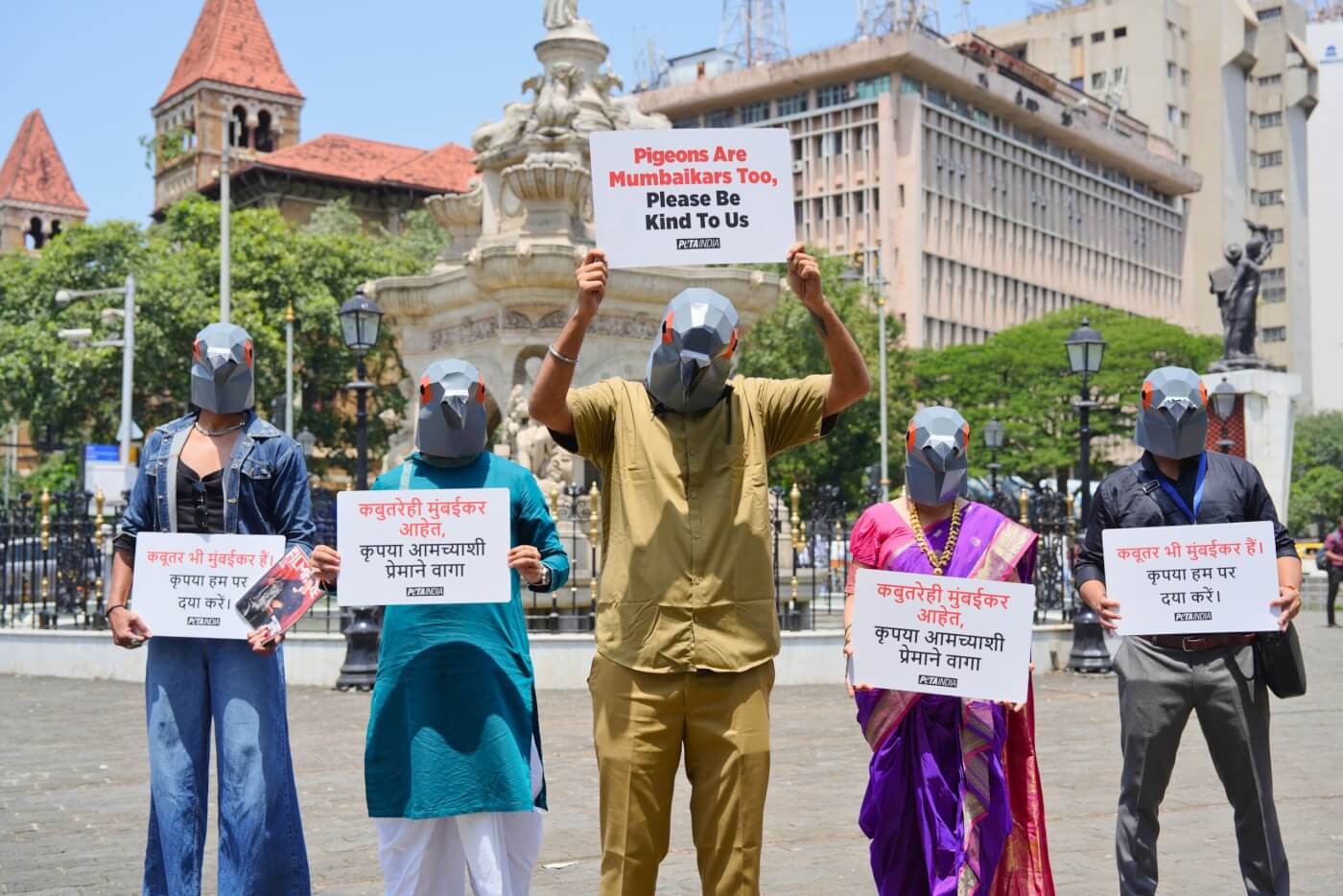
Pigeons are Mumbaikars simply trying to survive, just as we are, and abruptly stopping their feeding after generations is causing them to suffer. Replacing the feeding ban with reasonable feeding timings and cleaning schedules would show Mumbai respects tradition and leads practically and with compassion.
Fears around pigeon-related health risks are exaggerated. An RTI response from Mumbai’s three largest civic hospitals shows that only 0.3% of respiratory illness cases in 2024 were linked to pigeon exposure. International research also demonstrates that the risk of disease transmission from pigeons to humans is very low, even for people who are in close and regular contact with them. And pigeons are naturally resistant to bird flu.
Nevertheless, to address concerns while safeguarding pigeons and the tradition of feeding by Jains and other compassionate persons, PETA India has proposed three other practical steps to the government: designating specific feeding times and hubs at kabutarkhanas, ensuring regular cleaning and sanitation at these sites, and installing multilingual messages educating the public on proper feeding practices and the minimal health risks posed by pigeons.
PETA India has also written to Maharashtra Chief Minister Devendra Fadnavis on successfully implemented in several European cities. This approach combines the other measures PETA India has recommended with dovecotes that allow the replacement of eggs with dummy eggs. The system can be implemented easily and would allow Mumbai to reduce pigeon numbers gradually and humanely, while maintaining pigeon welfare, cultural and religious practices.
Mumbai’s kabutarkhanas are century-old spaces of cultural and religious importance, where countless citizens – many of them seniors – experience comfort and fulfilment in feeding pigeons. The birds, who have been fed at these places for generations, depend on this food source for survival. Criminalising or dismantling traditional feeding sites risks cruelty and would undermine the spirit of our Constitutional duty under Article 51A(g) to show compassion to all living beings, as well as obligations under the Prevention of Cruelty to Animals Act, 1960.
Act Now to Save Mumbai’s Pigeons!