

Mumbai Government Railway Police Welcome PETA India in Leading Workshop to Combat Cruelty to Animals Following Bird Seizure From Train
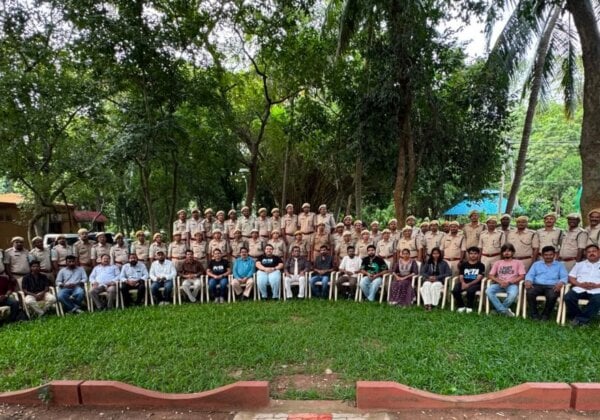
Nearly 100 personnel from the Mumbai Government Railway Police (GRP), including Senior Police Inspectors, Police Inspectors (PIs), Assistant Police Inspectors (APIs), Sub-Inspectors (PSIs), Assistant Sub-Inspectors (ASIs), Head Constables (HCs) and Constables, recently participated in a sensitisation workshop conducted by PETA India on combating cruelty to animals in the rail system and strengthening enforcement of animal protection laws. The workshop was held on 23 October at the Navrang Auditorium, Government Railway Police Headquarters in Ghatkopar, Mumbai. The Deputy Commissioner of Police of Central Zone, Smt. Pradnya Jedge, graced the session with her presence.
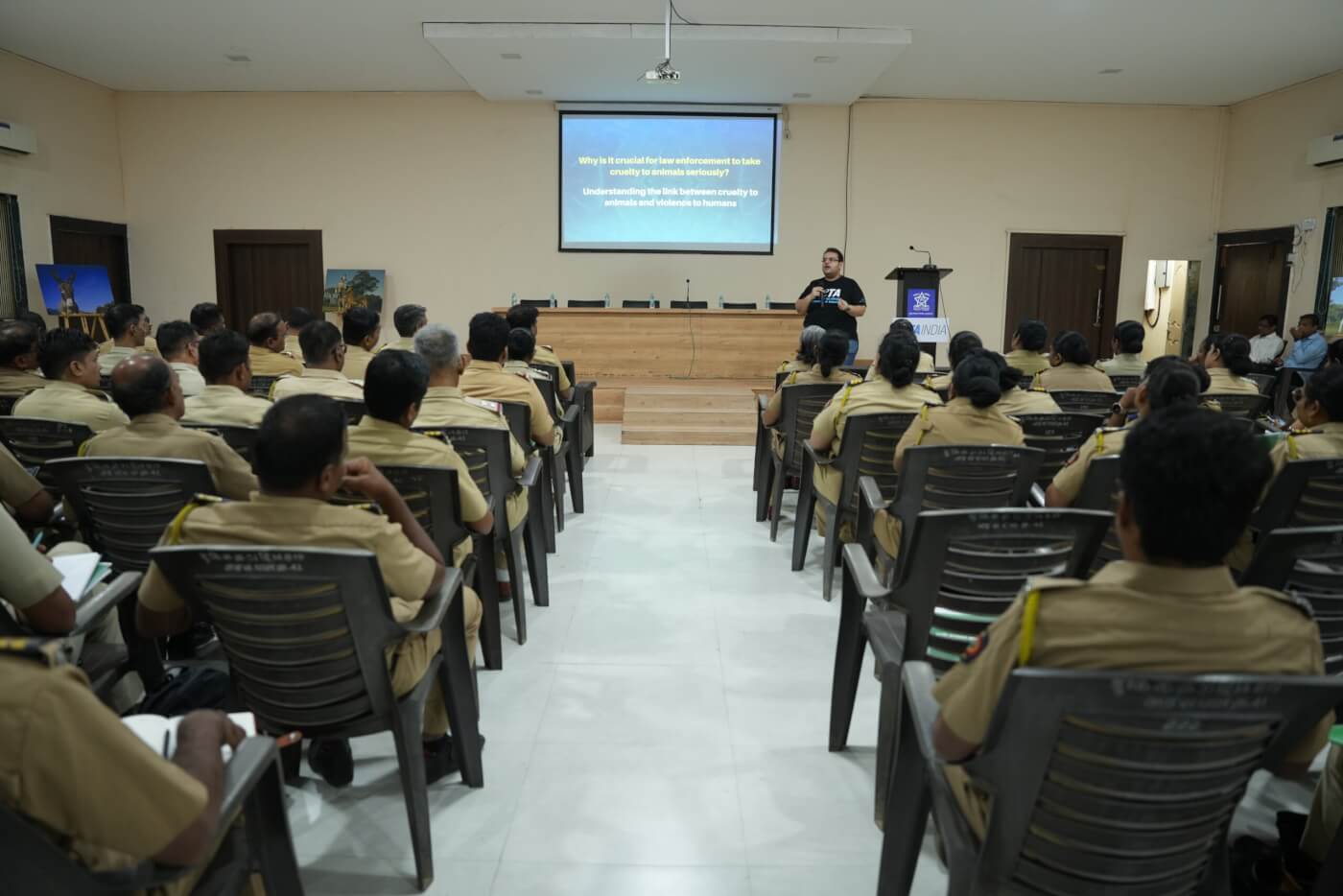
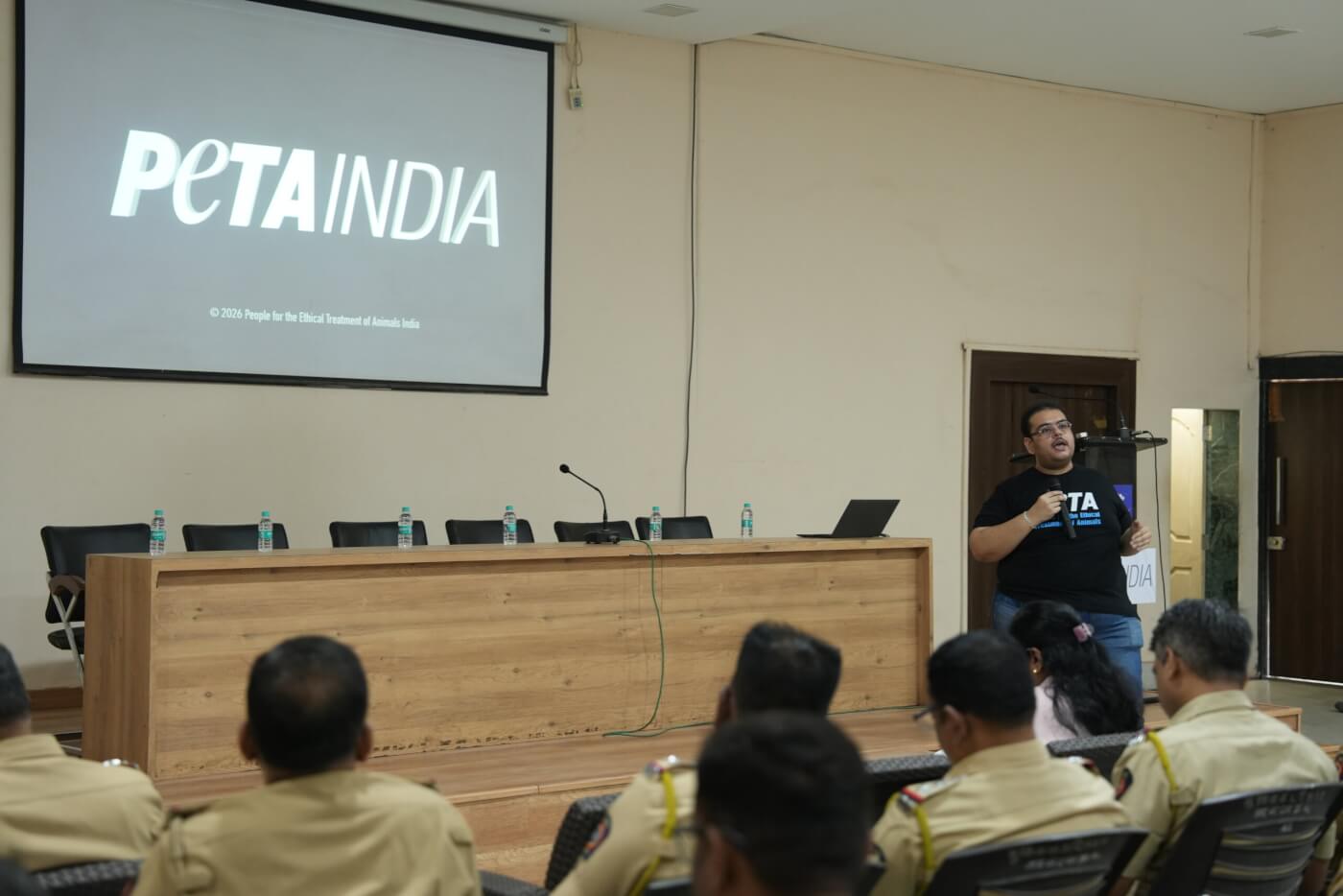
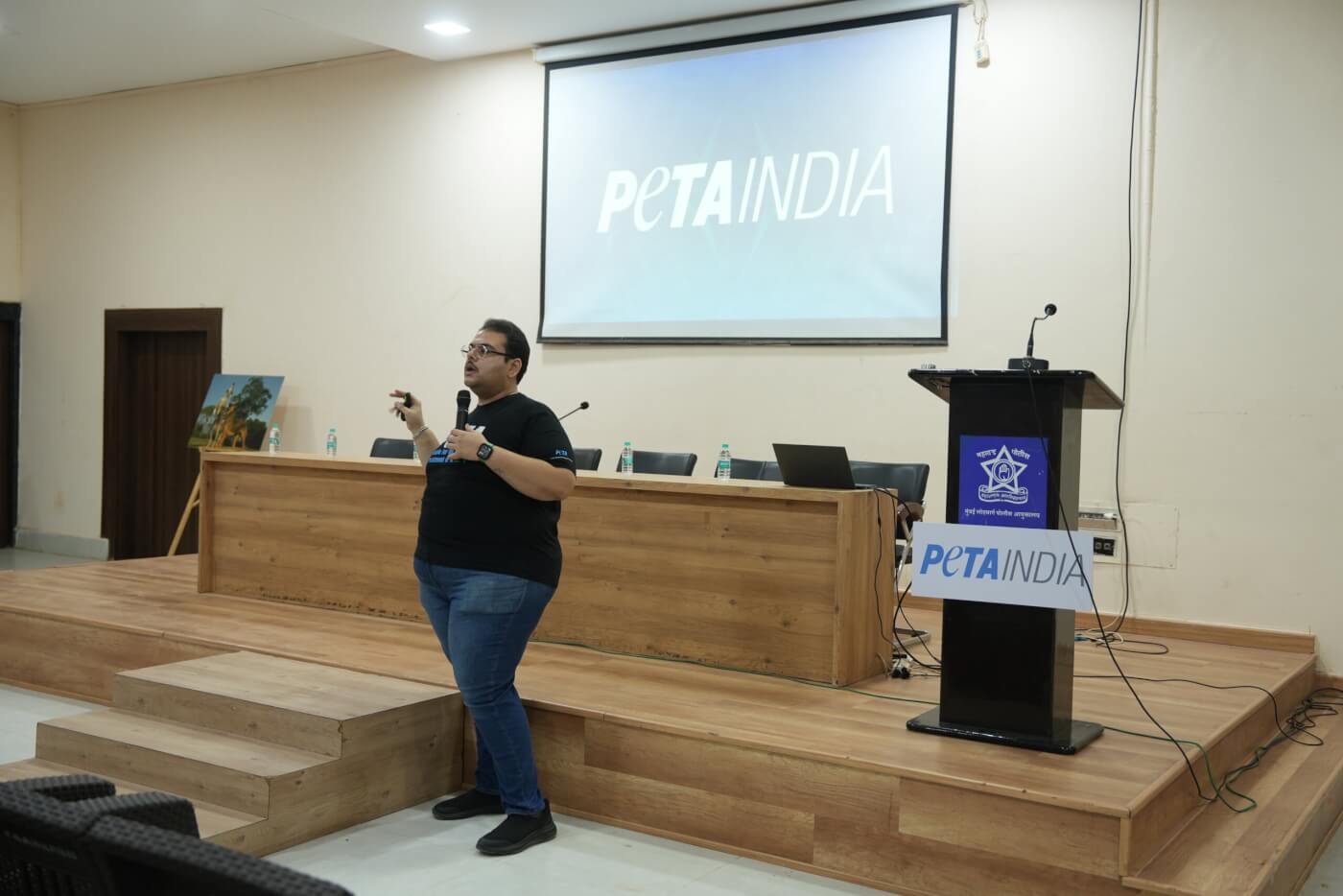
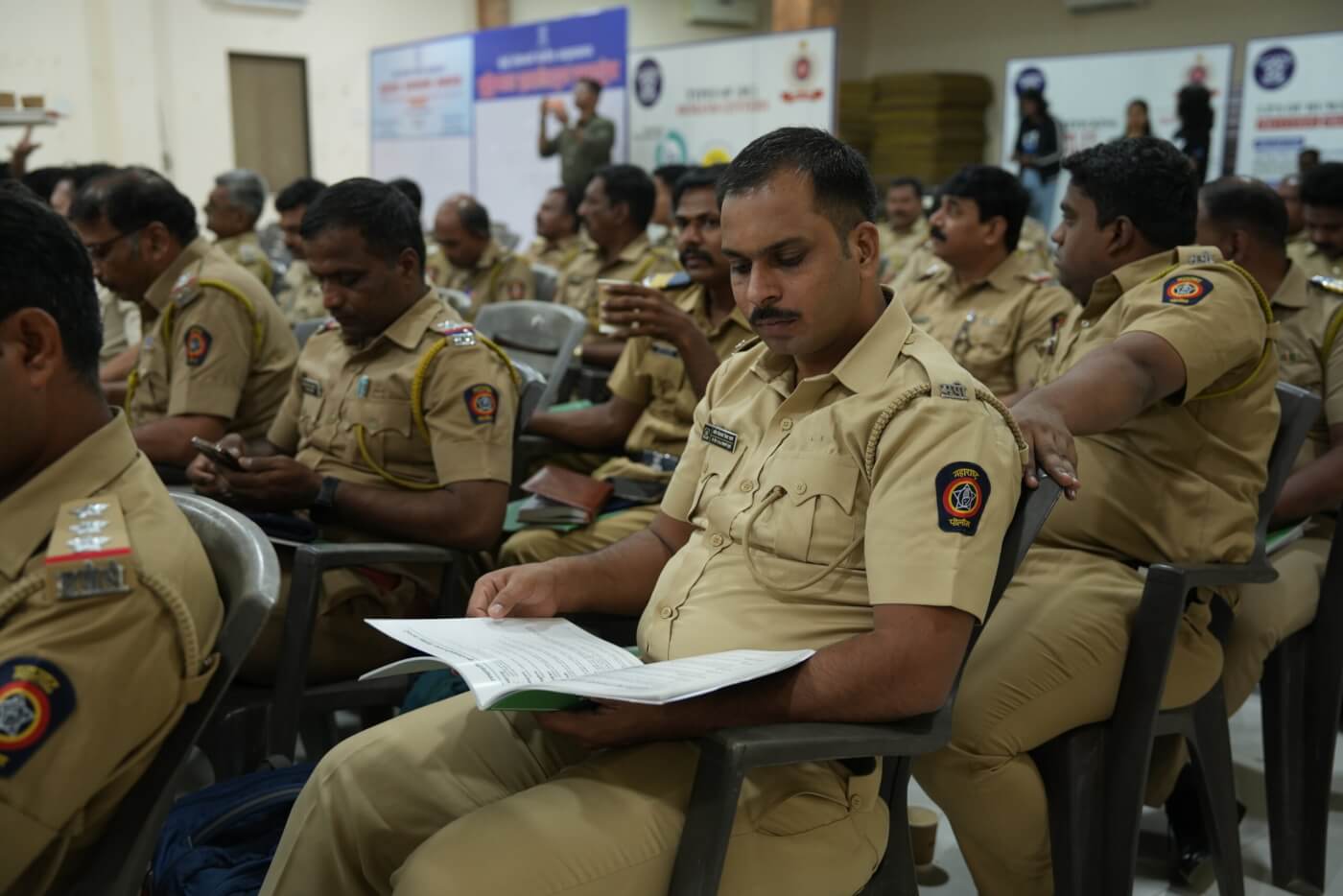
The workshop was organised as part of an initiative spearheaded under the leadership of Shri M. Rakesh Kalasagar, IPS, Commissioner of Police, Railways, Mumbai, and with the support of Smt. Pradnya Jedge, Deputy Commissioner of Police, Central Zone, recognising the importance of equipping GRP personnel with knowledge of animal protection laws and their role in preventing and responding to crimes against animals, especially animals who are trafficked and illegally transported via railways.
The workshop follows a rescue operation involving hundreds of budgerigars, finches, and cockatiels who were transported from Howrah to Mumbai in severely overcrowded cages aboard the Geetanjali Express (Train No. 12860) in September. In a significant victory for the welfare of birds, the Judicial Magistrate First Class (JMFC) 35th Court, CSMT, has granted interim custody of 282 birds to Kalote Animal Trust, as a result of efforts following the registration of an FIR by the Chhatrapati Shivaji Maharaj Terminus (CSMT) Railway Police Station, based on a complaint by PETA India.
The workshop focused on practical aspects of preventing and responding to cruelty to animals and covered key provisions of the Prevention of Cruelty to Animals Act, 1960, and the rules framed thereunder; the Wild Life (Protection) Act, 1972; the Bharatiya Nyaya Sanhita, 2023; and other relevant legal provisions. The session especially addressed the critical role of the police in detecting the illegal and cruel transport of animals through the railway network, rescuing and seizing animals in distress, preserving evidence, registering FIRs, conducting investigations, coordinating with veterinary and other government authorities, and taking appropriate legal action in cases of cruelty to animals and wildlife offences.
Recently, for the first time, the National Crime Records Bureau (NCRB) tracked cases of cruelty against animals in the country and compiled data, noting the registration of 9,039 cases and the arrest of 10,312 persons in 2024.
In 2021, the Federation of Indian Animal Protection Organisations released a report revealing that in the decade prior, nearly 500,000 animals were victims of crimes.
PETA India notes that many violent criminals have a documented history of cruelty to animals. A study published in Forensic Research and Criminology International Journal warns, “Those who engage in cruelty to animals were [three] times more likely to commit other crimes, including murder, rape, robbery, assault, harassment, threats, and drug/substance abuse.”
This initiative is part of PETA India’s ongoing efforts to sensitise law enforcement personnel and empower animal rights activists across India to ensure that crimes against animals are addressed with the seriousness they deserve. Similar sensitisation workshops have previously been conducted with the Border Security Force in Gwalior; the Chhattisgarh State Police; the Goa State Police and Goa Animal Husbandry & Veterinary Services officials; the Sikkim State Police; Pune City Police; Nagpur City Police; Mira-Bhayandar and Vasai-Virar Police; Belagavi district police; Hubli-Dharwad district police; Bengaluru City Police; Jammu, Kathua and Samba district police; Bengaluru and Chikkamagaluru Police Training Schools; Central District Delhi Police; Kerala Police Academy (KEPA), Thrissur; Bengaluru Rural Police; Tumakuru Police; and Andhra Pradesh State Forest Academy, Rajahmahendravaram.
PETA India has long campaigned to strengthen the PCA Act, 1960, which contains outdated, inadequate penalties, such as a maximum fine of only Rs 50 for convicted first-time offenders (although the BNS, 2023, and WPA, 1972, prescribe stronger punishments). In a proposal sent to the central government regarding an amendment to the PCA Act, PETA India has recommended significantly increasing penalties for cruelty to animals.
Report Cruelty to Animals