Campaigns PETAIndia.com
 
Action Alerts Campaigns Vegetarianism Living Media Centre About PETA Donate Now
 
Subscribe to E-News
 
 
Campaigns
Animals Used for Experimentation
Animals Used for Entertainment
Animals Used for Clothing
Vegan/Vegetarian
Deonar Abattoir
Companion Animals
Resources
Action Alerts
Activism Guide
Ads and PSAs
E-Cards
FAQs
Letter-Writing Guide
Literature
News Releases
PETA Kids
Web Banners

Animals Used for Experimentation

Experiments on a Live Cat

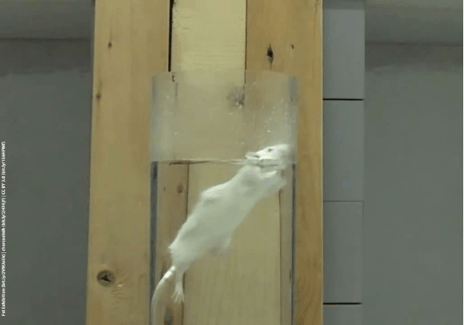
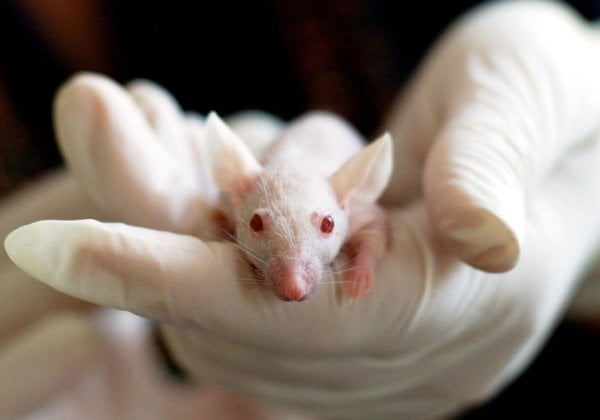
Countless monkeys, dogs, rats and other animals are burned, blinded, cut open, poisoned, starved and drugged behind closed laboratory doors every year for cockamamie reasons based on economics, convenience and old habit-not good science. These experiments and tests needlessly harm animals and they can harm humans as well.

Vivisection

"The best way to learn about the human anatomy and about saving human lives, is by studying humans, not animals. Imagine your surgeon saying, with scalpel in hand, don't worry, I've done this procedure on a goat."
—Dr Jerry Vlasak, board-certified trauma surgeon at a Level II Trauma Center in California and a fellow of the American College of Surgeons

Actor Alec Baldwin and rock icon Grace Slick are among the many that oppose the use of animals for experimentation. Says Grace Slick, "Vivisection is bad for both humans and animals. Using animals to extrapolate information for humans is stupid science."

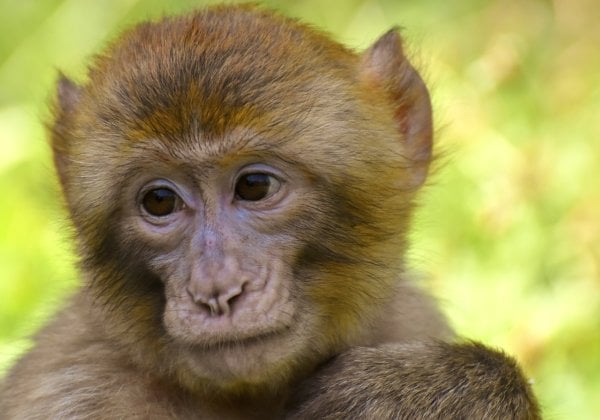
Vivisection is the practice of experimenting on live animals. Every year, research facilities across India, such as the Animal Research Centre, the Patel Chest Institute, National Institute of Nutrition (NIN), and the All-India Institute of Medical Sciences, squander valuable time and resources, as well as millions of rupees, conducting experiments on monkeys, dogs, cats, rabbits, rats, mice, and other animals. One of the largest animal suppliers, the National Centre for Laboratory Animal Sciences (NCLAS) in Hyderabad, supplies about 50,000 animals to laboratories annually and to 175 institutions in India including pharmaceutical companies and educational institutions. NCLAS and NIN have been under fire for years by animal protection organisations for not following basic and minimal animal welfare standards.Frightened Monkeys According to The Hindu, monkeys, social animals in the wild, have been kept in solitary confinement, many of them for between four to twelve years, at NIN. Toxicity tests, painful experiments in which poisons and drugs are forced into animals' bodies, have been conducted on monkeys, at NCLAS. Many vivisectors cannot get away with doing what they are doing in the countries where they are based, so they come to India.

There are many reasons to oppose vivisection. For example, enormous physiological variations exist among rats, rabbits, dogs and human beings. For example, in just one study to determine the carcinogenicity of fluoride, approximately 520 rats and 520 mice were given daily doses of the mineral for two years. Not one mouse was adversely affected by the fluoride, but the rats developed mouth and bone cancer. If test data cannot accurately be extrapolated from one type of rodent to another, it certainly cannot be extrapolated from a mouse to a human.

VivisectionIn many cases, animal studies do not just hurt animals and waste money; they harm and kill humans, too. For example, thalidomide, Zomax and DES were all tested on animals and judged safe, but had devastating consequences for the people who used them. Animal experimentation wastes time as well by leading researchers down blind alleys. Dr. Albert Sabin, who developed the oral polio vaccine, cited in testimony at a US congressional hearing that his work had been "delayed by an erroneous conception of the nature of the human disease based on misleading experimental models of the disease in monkeys". Similarly, 150 years of drug tests on animals have produced 25 drugs to combat stroke-none of which work in humans. Each false lead generates more fruitless studies, which eat up more time, money and animals-while humans suffer.

Suffering Dog"They've been trying to test on animals for the past 50 years. Nobody's come up with a cure. If you want to test on somebody, test on me."
—Montel Williams, American talk show host who suffers from multiple sclerosis

Montel is critical of wasted years and resources spent on animal tests that have led nowhere and fellow comedian and multiple sclerosis sufferer Richard Pryor agrees. "With all the technology we have-we can reach the whole planet at the same time-but we can't figure out how to cure a disease by poking people rather than poking animals? I don't get it," Montel says.

Many forward-thinking companies use sophisticated, non-animal research methods that are more accurate, less expensive and less time-consuming than traditional animal-based methods.

For example, Physiome Sciences uses mathematically based computer models to show the biophysical properties of both normal and diseased mammalian cells. Using these single-cell models, the company builds anatomically precise and 3-dimensional organ models. These virtual organs can accurately predict the effects of drug therapies for a variety of diseases.

Some of the most informative research takes place in hospitals, clinics and the offices of statisticians and epidemiologists.

Clinical trials, using human volunteers, case studies, autopsy reports and statistical analyses permit far more accurate observation and use of actual environmental factors related to human disease than is possible with animals confined in laboratories.

Confined Monkeys Medical historians have shown that improved nutrition, sanitation and other behavioral and environmental factors-not anything learned from animal experiments-are responsible for the decline in deaths since 1900s from the most common infectious diseases and that medicine has had little to do with increased life expectancy. All important advances in health are attributable to human studies, among them; anesthesia; bacteriology; germ theory; the stethoscope; morphine; radium; penicillin; artificial respiration; antiseptics; the CAT, MRI, and PET scans; the discovery of the relationship between cholesterol and heart disease with the half-century-old Framingham heart study (which showed that people with a cholesterol of 150 or below are not known to have heart attacks) and between smoking and cancer; the relationship between diet and other illnesses (Harvard nurses studies have linked dairy to osteoporosis and diet to other health consequences); the development of x-rays; and the isolation of the virus that causes AIDS. Animal testing played no role in these and many other developments.

It is not surprising that those who make money experimenting on animals or supplying vivisectors with cages, restraining devices and food for caged animals insist that nearly every medical advance has been made through the use of animals. But as the most innovative companies and scientists today are proving, there are always alternatives to animal use and abuse. In the case of vivisection, these alternatives are beneficial to both animals and humans.

Click here for information on vivisection from a physicians group's point of view.

Please make sure your donations do not support cruelty. Please do not donate to health charities or research institutes that conduct experiments on animals.

Product Testing

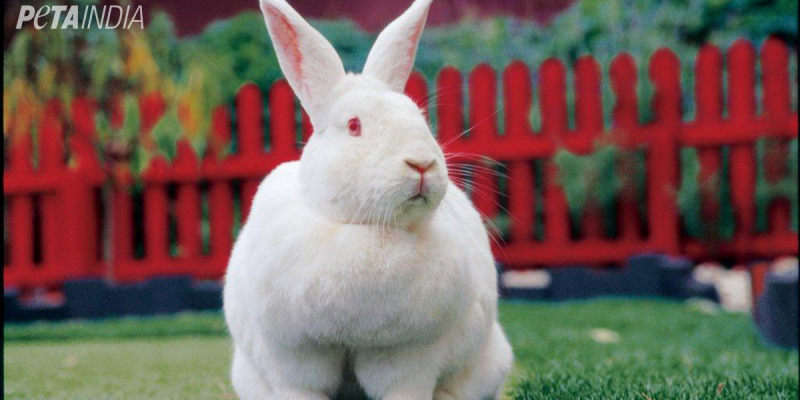
Suffering RabbitTwo of the most common animal safety tests are eye irritancy and lethal dose tests. In eye irritancy tests, chemicals are dripped into the eyes of albino rabbits. The animals are usually immobilised in stocks from which only their heads protrude, and their eyelids are held open with clips. Often, they receive no anesthesia during the tests; some rabbits break their backs as they struggle to escape the pain.

After placing the chemicals in the rabbits' eyes, laboratory technicians record the damage to the eye tissue, which can include inflamed irises, ulceration, bleeding, massive deterioration and blindness.

Product Testing The results of eye irritancy tests are questionable, as they vary from laboratory to laboratory-and even from rabbit to rabbit.

In acute toxicity, or lethal dose, tests, increasing amounts of detergent, eye shadow and other products are force-fed to rats, mice, rabbits, guinea pigs and other animals until a certain percentage of them are poisoned to death. The widely used lethal dose 50 (LD50) test continues until at least 50 percent of the animals die, which usually takes several weeks.

Experimenters observe the animals' reactions to the chemicals-everything from convulsions, labored breathing, diarrhea, emaciation and skin eruptions to bleeding from the eyes, nose or mouth. Like eye irritancy tests, lethal dose tests are unreliable at best.

'If you're still using cosmetics tested on animals, it's time for a makeover.' —Pamela Anderson, Actress

"If you're still using cosmetics tested on animals, it's time for a makeover."
—Pamela Anderson, Actress

In 1996, the use of animal tests for cosmetics was made optional by the Bureau of Indian Standards. There are now over 500 companies around that world that do not test their products on animals. The European Parliament recently voted in favor of imposing a sales ban on all new cosmetic products that have been tested on animals. "Those products should no longer be sold," said German socialist member Dagmar Roth-Behrendt, who authored the legislative bill. "Alternative methods must be applied and used... Eventually, this should lead to a full ban on sales of all products where animal testing was used." The ban will also apply to all imports of animal tested cosmetics.

Consumers can help end animal tests for good by buying only products that have not been tested on animals. Click here for a list of companies that do and do not test their products on animals. Please keep in mind that this list is not exhaustive. If in doubt, please contact PETA or the company concerned. If the company does not reply, it is often an indication that the company continues to test on animals, despite the alternatives available. If you have purchased products from a company that tests on animals, please return them with a letter demanding your money back and stating that you will not purchase that company's products until it stops abusing animals.

Dissection in Schools

"I believe it is a serious moral problem that your children are taught to cut up animals."
—Pat Graham, mother of Jennifer Graham, student who first turned the US dissection industry on its ear when she refused to dissect in 1987

"Dissection is murder. It is unfair and immoral for teachers to force us to mutilate our friends."
—Neil Joshipura, Student

Dissection In SchoolDissection not only desensitises students to animal suffering by teaching them that animals are nothing more than classroom tools, it also wreaks havoc on the environment.

"With all the violence our children are exposed to these days, the classroom should be a peaceful place, secure and comfortable. We have the responsibility as teachers to lead our children away from violence and pain. Dissection is an endorsement of pain. It does not teach respect for life; it teaches disdain for life."
—Cindy Zacks, biology teacher

"Dissection of frogs shows people that animals are expendable, not that life should be respected."
—Julie Eyrich, Student

Alicia Silverstone

Actress Alicia Silverstone thinks frogs are for kissing, not killing

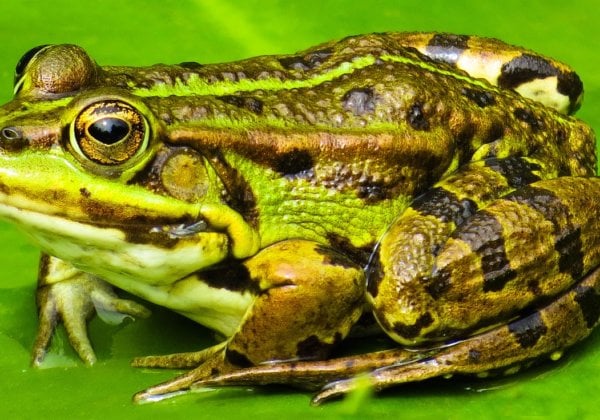
Frogs are the most commonly dissected animals, although other species, such as cats and dogs, are also used. Frogs can eat their own body weight in insects every single day, and their removal from the ecosystem disrupts nature's delicate balance, resulting in increased crop destruction and the spread of diseases such as malaria. In the years preceding its ban on the frog trade, India was earning $10 million a year from frog exports but spending $100 million to import chemical pesticides to fight insect infestations. Several species of frogs are now endangered in India because so many were taken from the wild.

"I don't believe in eating animals, and so I don't think I should have to dissect animals. It's against my moral beliefs. I think the alternatives are in many ways better than dissection. They can show the actual function of the organs, the beating of the heart."
—Rachel White, Student

Fortunately, students in India can lay down their scalpels: In 1997, the Delhi High Court ruled that every student has the right to a humane alternative to dissection. Alternatives, ranging from anatomically correct models of human organs to sophisticated computer programs, are readily available. One popular alternative, the Compu Series developed and sold by the Chennai-based Blue Cross, allows students to digitally dissect everything from "Compufrogs" and "rats" to "Compuroaches".

For more information or for help in getting dissection cut out of your classroom, contact PETA.

Use of Animals for Medical Training

"The best schools are doing away with crude and obsolete animal laboratories and replacing them with more exciting and humane teaching methods."
—Neal D. Barnard, M.D., President, Physicians Committee for Responsible Medicine

Use of Animals for Medical Training The UK has banned the use of live animals for medical training purposes and over half of the medical schools in the US, including Standford, Columbia, Duke, Harvard, and Yale, have also adopted more humane and superior methods. However, many medical schools are still holding onto live animal laboratories to teach basic human physiology, pharmacology and surgery practices despite great advances in nonanimal teaching methods that are not only cost-effective, but also eliminate any ethical concerns. In a typical laboratory exercise, students observe the effects of various drugs on a dog. Many educators agree that the use of animals for medical training purposes is anti-educational, claiming that it devalues life for those that are supposed to be future lifesavers. Doctors and educators also argue that the use of dogs and other animals misguides students since the animals' physiology is so different from that of a human and because the treatment of animals by most instructors is nowhere near as careful and precise as the treatment of human patients should be. What's more is that animals are often used over and over for more than one class and for various painful surgeries and in many training programmes, including the laboratory exercise described above, are killed at the end.

Harvard Medical School brings students directly into the human opeerating room to learn right alongside the surgeons, perfusionist, and anesthesiologist during actual cardiac bypass surgery instead of using animals. CD-ROMs, such as "Physiology Labs" by SimBioSys, let students navigate through respiratory, cardiovascular, and renal physiology and experiment with many different parameters in a truly interactive program.

"By seeing what goes on in the human operating room, these students will learn what it takes to save a life or improve the quality of life. And, after all, isn't that the goal of all doctors?"
—Henry Heimlich, M.D., on Harvard's innovative program

"It was such a privilege to be in the operating room where a human being was being given life and healed."
—Rachel Freelund, Harvard Medical Student

In the US, the American Medical Student Association (AMSA) has twice passed resolutions urging schools to provide alternatives to animal laboratories for students with either "moral or pedagogical" objections and has condemned "faculty intimidation of medical students to force them to attend classes and labs that use live animals."

For more information on the use of animal for medical training, click here. To learn how you can help eliminate or reduce the use of animals for training purposes in your medical school, click here or email Physicians Committee at Responsible Medicine at research@pcrm.org.

See Also
PETA.org Factsheets
StopAnimalTests.com
Printer-Friendly      l      Subscribe to E-News   
Contact PETA      l      Disclaimer      l      Privacy Policy      l      PETA Web Sites   
PETA INDIA PO BOX 28260 JUHU, MUMBAI 400 049