

Gauhati High Court Directs Supreme Court Appointed High-Powered Committee to Consider Rehabilitation of Jaimala and Eight Other Assamese Elephants Illegally Held in Tamil Nadu Following PETA India Plea
In a just-released order, the Gauhati High Court has sought a report from the High-Powered Committee appointed by the Supreme Court inter alia in relation to the rehabilitation of nine Assamese elephants held in illegal captivity in Tamil Nadu temples. The order was passed by Justice Devashis Baruah in a petition filed by the Assam government in September 2022 to get elephant Joymala (also known as Jeymalyatha) released following public uproar in response to video evidence of her being ferociously beaten. She was only leased out for three years from Assam to the Srivilliputhur Nachiyar Thirukovil temple in Tamil Nadu in 2011, but continues to be in the temple’s custody.
PETA India, impleaded as a respondent in the case and had urged that Joymala be rehabilitated to a sanctuary to spend her life free of chains and in the company of other elephants. PETA India had further urged the Gauhati High Court to refer the case to the High-Powered Committee, being an expert committee constituted under the chairmanship of (retd.) Justice Deepak Verma to adjudicate issues such as ownership, transfer and rehabilitation of captive elephants. Additionally, similar cases of eight other elephants from Assam, whose period of temporary transfer to Tamil Nadu had admittedly expired, were referred to the High-Powered Committee.
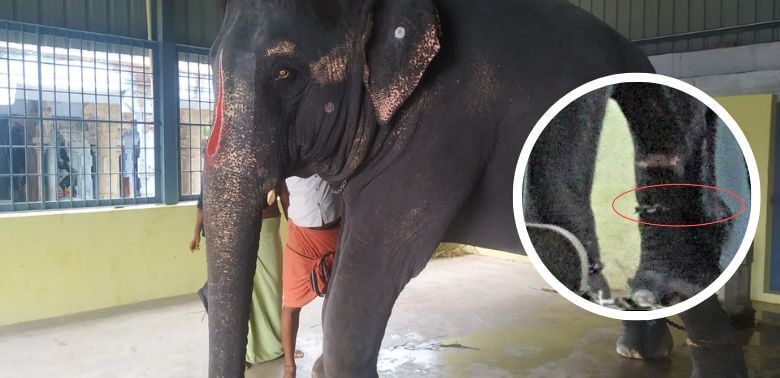
The Gauhati High Court has also directed the Tamil Nadu government to carry out monthly inspections in the facilities where the nine elephants are kept and pending final adjudication by the High-Powered Committee, to seize and rehabilitate elephants who are lacking nutrition, medical and other facilities. The Gauhati High Court noted that the case had originated when the issue of Joymala’s torture at the hands of the temple was brought to light in the media and by PETA India, and accordingly directed the High-Powered Committee to provide PETA India an opportunity to place their point of view in the matter. The Court remarked that despite submitting that the elephant is revered and worshiped, the temple’s stand in the matter reduced Joymala to a moveable object and did not appear to be genuinely in the interest of the elephant.
Since 2021, the media have reported on numerous instances in which Joymala was severely beaten by different mahouts, leading Assam to demand her return. A 2022 inspection at the Krishnan Kovil temple, where Joymala is kept, revealed that the cruelty to the elephant is so routine that her mahout used pliers to painfully twist her skin to control her, even in front of PETA India inspectors. In March 2025, after reviewing videos and other documentation about her plight, over 50 veterinarians from different parts of the country signed an opinion in favour of Joymala’s rescue, which was sent to various concerned authorities in Assam and Tamil Nadu by PETA India.
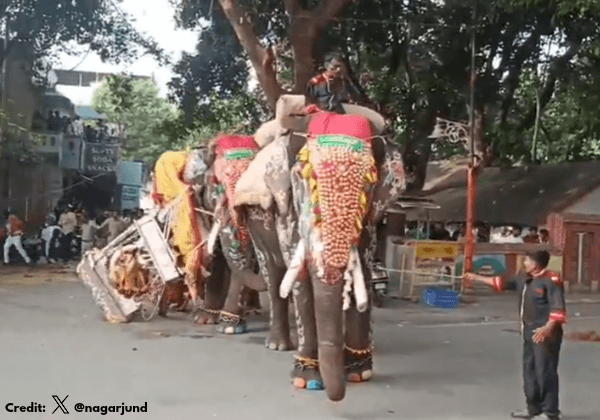
PETA India had also cautioned that Joymala’s misery would make her extremely unpredictable, putting her mahouts and devotees’ lives at risk. Such incidents are not uncommon, as frustrated elephants in captivity have repeatedly attacked their mahouts, devotees, tourists, or others around them. In 2026 alone, so far, 8 attacks involving captive elephants have already been reported. In 2025, at least 20 captive elephants in Kerala became upset and killed 6 people on different occasions, injuring several others and damaging property. During the 148th Rath Yatra in Ahmedabad, 3 elephants ran amok, injuring at least 2 people and triggering mass panic. In 2024, at least 14 incidents were reported across India in which captive elephants injured or killed their mahouts or other people around them.
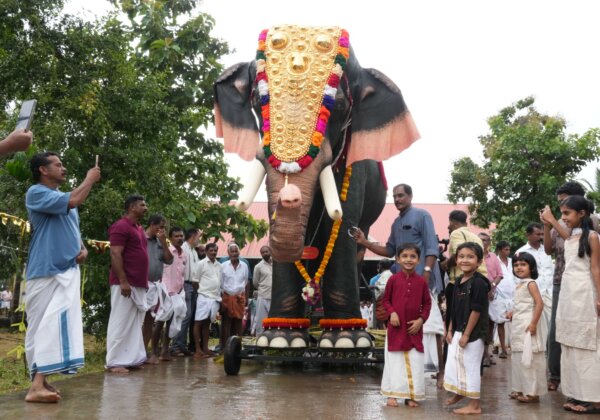
PETA India advocates for all venues and events currently using elephants to switch to lifelike mechanical elephants or other means in place of real elephants and had offered to gift the Arulmigu Nachiyar (Andal) Temple a mechanical elephant if they allowed Joymala to be rescued.
Today, at least 45 mechanical elephants are used in temples across India, of which PETA India was involved in donating around 30 in recognition of the temples’ decisions to never own or hire live elephants. These mechanical elephants are now used to conduct ceremonies at their temples in a safe and cruelty-free manner, helping real elephants stay with their families in the jungle.