

Animal Sacrifice Crackdown in Rajasthan Following PETA India Intervention
In two cases regarding animal sacrifice in Rajasthan during the recent festive period, action by PETA India led to the registration of an FIR in Kota and the prevention of sacrifice in Churu.
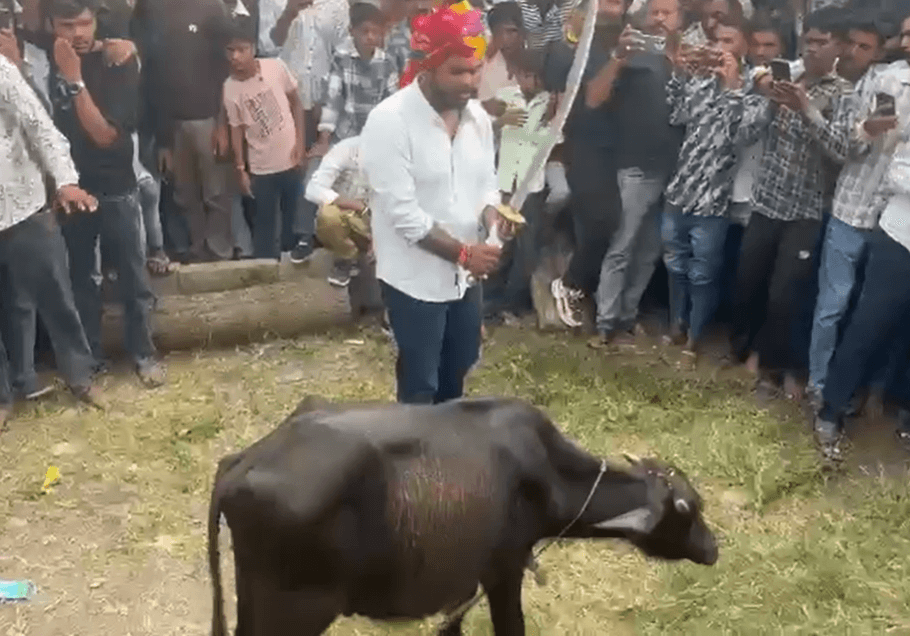
PETA India worked with senior officials of Kota rural police to get an FIR registered after learning that a group of men had beheaded a buffalo calf on Dusshera. The gruesome incident occurred in Kumbhkot village and was captured on video. The FIR was registered against three persons under Sections 325 & 3(5) of the Bharatiya Nyaya Sanhita, 2023; and Section 6 of the Rajasthan Animals and Birds Sacrifices (Prohibition) Act, 1975.
In another incident, upon receiving information that animal sacrifices, particularly of goats, were planned over the nine days of Navratri, from 22 September to 2 October, as part of annual rituals at Bhairavji Mataji temple in Bobasar Charnan village, Churu district, PETA India swiftly intervened. Acting on PETA India’s complaint, the Sub-Divisional Magistrate of Sujangarh directed the Salasar police station to issue a strict warning to the temple committee in the days leading up to the rituals, ensuring that no animals were killed or harmed.
PETA India commends the Churu administration—especially Shri Vishram Meena, IAS, Divisional Commissioner, Bikaner; Shri Abhishek Surana, IAS, District Magistrate, Churu; and Shri Om Prakash Verma, Sub-Divisional Magistrate, Sujangarh, for taking steps to ensure illegal sacrifice did not take place, and the Kota Rural police—especially the Superintendent of Police, Kota Rural, Shri Sujit Shankar, IPS, for sending a clear message that cruelty to animals will not be tolerated. Just as human sacrifice is now recognised and condemned as murder, the outdated practice of animal sacrifice must also be abolished.
In its complaint, PETA India highlighted that the Rajasthan Animals and Birds Sacrifice (Prohibition) Act, 1975, expressly bans animal sacrifice in temples, temple premises, and other places of public religious worship. Under Section 4, no person may officiate, perform, assist in, or take part in such acts, while Section 5 prohibits the use of temples or other places of worship for this purpose by anyone in possession or control of the premises. Further, Section 8(1) authorises the Executive Magistrate to issue a prohibitory order if, on receiving a complaint or information, there is reason to believe that a sacrifice is likely to occur in violation of the Act.
In its complaint, PETA India also pointed out that under the Prevention of Cruelty to Animals (Slaughter House) Rules, 2001, and the Food Safety and Standards (Licensing and Registration of Food Businesses) Regulations, 2011, the slaughter of animals for food is permissible only in a registered or licensed slaughterhouse. Any other sites used for the slaughter or sacrifice of animals are neither registered to kill them nor equipped with species-specific stunning facilities, which are mandatory under the law to prevent causing them unnecessary pain and suffering.
Gujarat, Kerala and Puducherry already have laws in place prohibiting the religious sacrifice of any animal in any temple or its precinct. Karnataka, Andhra Pradesh, and Telangana prohibit it in any place of public religious worship, adoration, its precinct, or any congregation or procession connected with religious worship on a public street.
Help Put an End to Animal Sacrifice