

Punjab Animal Husbandry Department, With Support from PETA India, Seizes Hundreds of Illegal Spiked Bits Used to Control Horses for Weddings and Brick Kilns Across Punjab
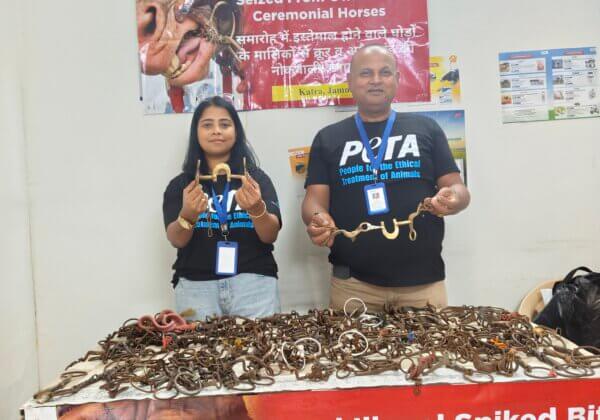
Punjab Animal Husbandry, following an awareness-cum-enforcement drive with PETA India, seized over 200 spiked (or “thorn”) bits used to control horses used for ceremonies, rides, and brick kilns in recent raids throughout the city. These torture devices were displayed at the Government Veterinary Polyclinic, Verka, Amritsar. PETA India hopes the display will encourage families to celebrate weddings without involving animals. The use of spiked bits – which are designed deliberately to incise animals’ mouths – violates Rule 8 of the Prevention of Cruelty to Draught and Pack Animals Rules, 1965.
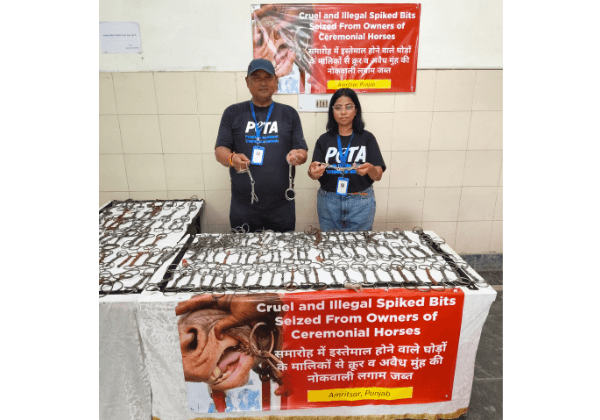
Spiked bits are used to control horses through pain, bloodying their lips and tongues, and inflicting psychological trauma and lifelong damage. The continued use of spiked bits stems from the false belief that horses require painful devices to remain under control, when these tools only inflict severe injury and distress.
PETA India has launched a nationwide campaign aimed at helping police, and Animal Husbandry Department in raising awareness about, and enforce the ban on using spiked bits on horses
based on the results of a multi-state survey of government efforts to enforce the ban. After being contacted by PETA India, several other states and union territories – including Uttar Pradesh, Assam, Bihar, Delhi, Himachal Pradesh, Karnataka, Telangana and Nagaland – also issued orders mandating the enforcement of this prohibition. PETA India is campaigning not only for police to search for and confiscate illegally used devices but also for legislation to be introduced to close a loophole that still allows the manufacture and sale of these devices.
PETA India urges the authorities to encourage the adoption of humane, mechanised alternatives instead of dependency on animals and for couples to ditch horses and make their weddings an occasion for all to celebrate.