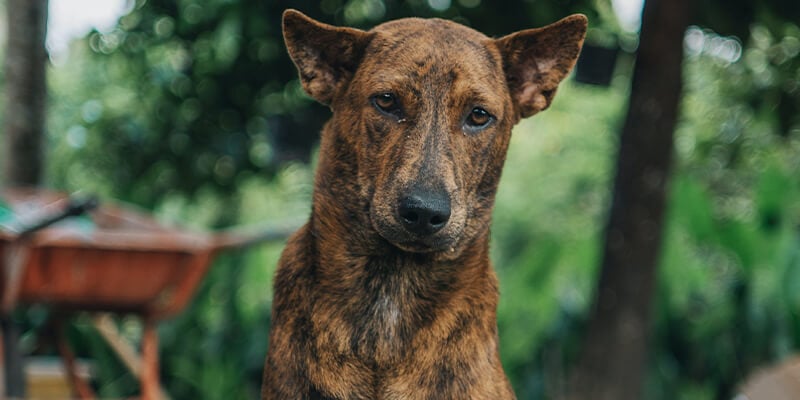


Two Booked for Poisoning Three Dogs, Following PETA India Intervention
For Immediate Release:
17 December 2024
Contact:
Meet Ashar; [email protected]
Hiraj Laljani; [email protected]
Bengaluru – In response to the poisoning of three community dogs, People for the Ethical Treatment of Animals (PETA) India worked with the complainant to ensure that a first information report (FIR) was promptly registered.
The incident allegedly took place on 04 December at La Ville Township, Adigara Kallahalli Village, Sarjapura Hobli, Anekal Taluk, Bengaluru – 562 125. The accused, identified as Mr Gokul and Ms Shruti Nair, allegedly poisoned the dogs, leading to the excruciating death of one of them. The aftermath of the cruelty has left two other dogs severely ill. One male dog, though suffering from liver damage, is responding positively to treatment and showing signs of improvement. Tragically, a female dog sustained critical damage to her nervous system, rendering her blind and leaving her unable to stand or walk. She has also lost a partial smell.
The Sarjapura Police registered the FIR under Section 325 of the Bharatiya Nyaya Sanhita (BNS), 2023 and Section 11 of the Prevention of Cruelty to Animals (PCA) Act, 1960. Section 325 of the BNS, 2023, makes the maiming or killing of any animal a cognisable offence and provides for a jail term of up to five years, a fine, or both. Section 11(1) of the PCA, 1960 defines the term “cruelty“, which includes causing unnecessary pain and suffering and makes it punishable.
“Those who abuse animals often move on to harming humans. For everyone’s safety, it’s imperative that members of the public come forward with what they know about this case and report cruelty to animals such as this one to the police,” says PETA India Cruelty Response Coordinator Virendra Singh. “We commend Shri Dundappa Barki, Sub Inspector of Police at Sarjapura Police Station, for promptly registering the FIR and sending a clear message that cruelty to animals will not be tolerated.”
PETA India recommends that perpetrators of animal abuse undergo psychiatric evaluation and receive counselling, as abusing animals indicates a deep psychological disturbance. Research shows that people who commit acts of cruelty to animals are often repeat offenders who move on to hurting other animals, including humans. A study published in Forensic Research & Criminology International Journal stated, “Those who engage in cruelty to animals to animals were [three] times more likely to commit other crimes, including murder, rape, robbery, assault, harassment, threats, and drug/substance abuse.”
PETA India – whose motto reads, in part, that “animals are not ours to abuse in any way” – has long campaigned to strengthen the PCA Act, 1960, which contains outdated, inadequate penalties, such as a maximum fine of only Rs 50 for convicted first-time offenders (although the BNS, 2023 prescribes stronger punishments). In a proposal sent to the central government regarding an amendment to the PCA Act, PETA India has recommended significantly increasing penalties for cruelty to animals.
For more information, please visit PETAIndia.com or follow the group on X, Facebook, or Instagram.
#