

India’s Zoos: A Grim Report
Concrete and Iron Cells
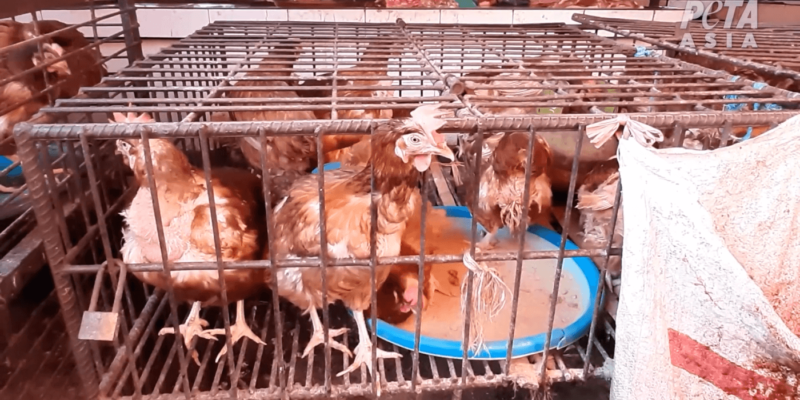
Since July 2005, PETA investigators have visited more than 30 zoos throughout India and found appalling neglect, decrepit facilities and animal suffering on a massive scale. Every facility was seriously deficient in terms of food, drinking water, housing, veterinary care, environmental enrichment, safety and security.
Countless animals have no food or water. Many live in concrete and iron cages that do not have any enrichment or even a blade of grass. Some cages are so small that the animals can barely move. Many animals exhibit neurotic and abnormal behaviour, including pacing, head-bobbing and extreme agitation. Some animals have visible injuries and are clearly ill.
Animals are housed inappropriately: Prey animals are kept in close proximity to predators in several facilities, causing extreme stress to both types of animals. Some social primates are housed individually, and one elephant was chained by both front legs. Many animals have no shelter to protect them from weather extremes or to give them privacy. Animals were observed eating debris, rotten food and items that were thrown into their cages. Water moats are dry, fencing is rusted and insecure and cages are barren and bleak.
Some facilities have few or no staff members present, much less security. One zoo was officially closed, yet our investigators and other visitors walked right in. Visitors were seen feeding the animals with no zoo personnel in sight. Our investigators saw some visitors teasing and taunting animals and throwing rocks and debris. Few or no educational materials were available.
Supreme Court Order
With the results of our investigation, we filed a case in the Supreme Court of India. The Supreme Court gave an order on 9 October 2006, banning the further breeding of specified animals in zoos across the country. To see a copy of the order, click here.
Assam
Madhya Pradesh
Maharashtra
- Aurangabad Municipal Zoo, Aurangabad
- Hutatma Bagh Prani Sanghralaya, Solapur
- Mahatma Gandhi Zoo, Solapur
- Maharaja Shahaji Chattrapati Zoo, Kolhapur
- Maharajbaug Zoo, Nagpur
- Rajiv Gandhi Zoological Park, Pune
- Shikshan Mandal Snake Park, Dholgarwadi, Kolhapur
- Somnath Prakalpa Zoo, Chandrapur
Meghalaya
Mizoram
Nagaland
Rajasthan
Uttar Pradesh
West Bengal
Alipore Zoological Gardens, Kolkata
What You Can Do
Animals in zoos throughout India are suffering. Significant improvements across the board need to be implemented immediately. Please write polite letters to the following officials expressing your concern and demanding that action be taken:
Sh.Bhupender Yadav
Minister of Environment and Forests of India
Indira Paryavaran Bhavan
Jor Bagh Road
New Delhi – 110 003
INDIA
24695136, 24695132, 24695127
Dr. V. Clement Ben, IFS.
Member Secretary
Central Zoo Authority
Annexe-VI, Bikaner House
Shahjahan Road
New Delhi 110 011
India
91-011-2338 1585, 23073072
91-011-2338 6012 (fax)
[email protected]
The most significant action that you can take is to stop patronising zoos and animal displays. If their financial support disappears, zoos will be forced to stop breeding animals and capturing them from the wild. If a zoo in your area relies on government subsidies to survive, urge your officials to stop funnelling tax money into the zoo. Zoos divert funds from legitimate conservation efforts. If your zoo solicits money from corporate donors, charitable organisations and foundations, write to the zoo’s sponsors and encourage them to instead direct their money towards the protection of animals in the wild. Include a copy of PETA’s “Zoos: Caged Cruelty” brochure with your letters.