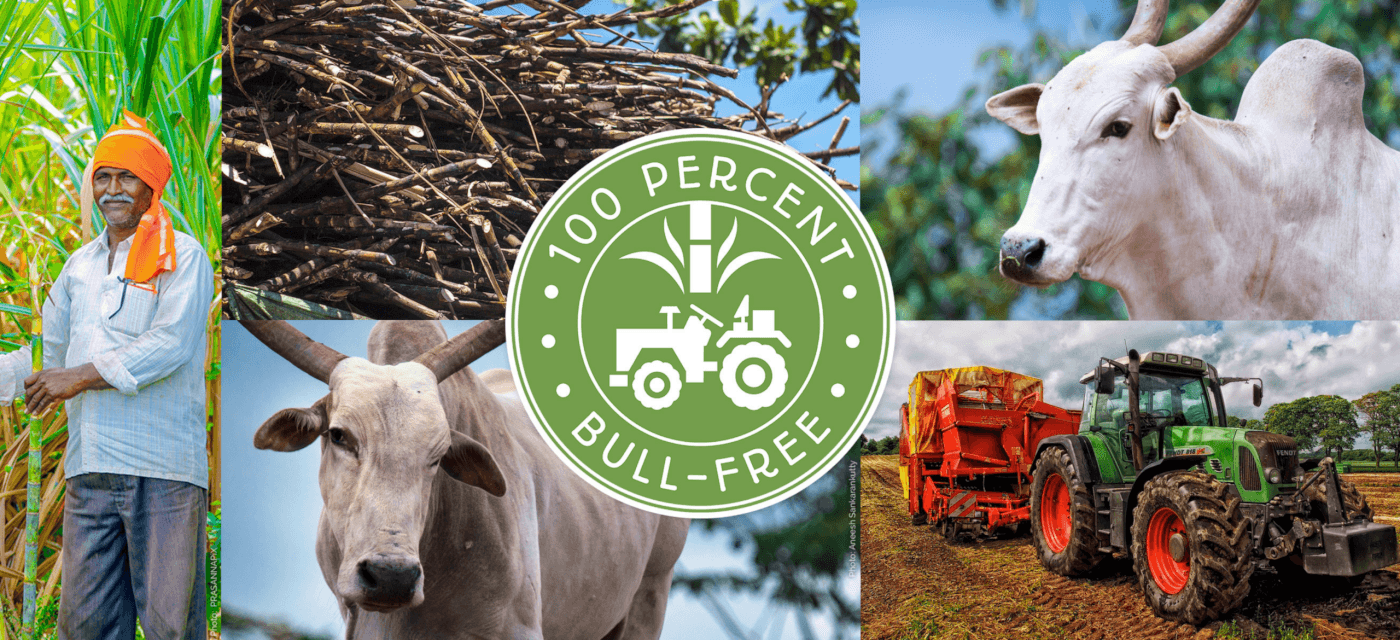
What is PETA India’s ‘100 % Bull-Free’ Certification?
PETA India ‘100% Bull-Free’ certification recognises Indian sugar mills (processors/refiners) that have made the compassionate and forward-thinking commitment to transport and handle sugarcane and sugar products only through mechanised means, thereby sparing bulls or other animals grueling labour, which also improves human workers’ lives. The certification enables sugar buying companies to make purchasing decisions aligning with their customers’ values.
End Bull Abuse: Reform Sugarcane Transportation
Thousands of bulls are forced to haul sugarcane loads, often far exceeding legal limits, in harsh, punishing conditions. The bulls suffer immensely from exhaustion, hunger, dehydration, weapon use and other violent handling, and ultimately irreversible leg conditions all while enduring long hours in the scorching sun.
Ending Exploitation: A New Era for Bulls and Workers
The reliance on this outdated practice sustains a cycle of animal abuse, poverty, and widespread human rights issues. Because of the inefficiency of using slow-moving, exhausted, and abused bulls who are limited in how much weight they can carry, even when overloaded, the families reliant on them are forced to work long hours and to have an all hands-on deck approach. This results in human rights violations like child labour and dangerous working conditions. And when bulls become injured or otherwise unable to work, the families lose their source of income.
How Does Mechanisation Help Bulls and Humans?
Mini tractors can carry over 8.5 tons of sugarcane, and large tractors over 18 tons—more than four times the capacity of a bull —resulting in a 20%-time savings that translates into improved earnings and healthier working conditions for human workers. The workers can also use the tractors to earn money from other projects year-round.
And importantly, tractor use helps end animal suffering by eliminating the overloading, abuse, and neglect that bulls endure in traditional transport systems.
Hear it from workers who have transitioned to the use of tractors:
Who's Using PETA India’s ‘100 % Bull-Free’ Certification?