PETA India is reshaping the future for India’s elephants with innovation. NDTV’s The Changemakers Season 5 showcases how PETA India is marrying compassion with technology to transform traditions, promote empathy for elephants and to help them live free. (With special thanks to Wildlife SOS for their love and care for elephant Lakshmi, rescued by PETA India, and other rescued elephants and for having their sanctuary featured in this documentary. Wildlife SOS is a separate organisation to PETA India and has no funding relationship with PETA India.)
Elephants Belong in Forests, Not In Chains
Elephants are intelligent, social, and emotional wild animals. Yet, in captivity, they endure unimaginable suffering—beatings and weapon use, near constant chaining, and inadequate food, water, and veterinary care.
Elephants used for performances like rides, circuses and in temple processions suffer from loneliness and severe foot problems and leg wounds caused by chaining and standing on concrete for much of their day. Frustrated and distressed, many lash out, causing injuries and fatalities in humans. In Kerala alone, captive elephants killed 526 people in 15 years, according to the Heritage Animal Task Force.
Concerned about their suffering, PETA India set out to find a win-win solution—one that allows traditions and entertainment to continue, but without causing elephants harm. This is how the concept of replacing real elephants with mechanical ones was born. Meanwhile, sanctuaries like Wildlife SOS are helping elephants they rescued and those rescued by PETA India and others gain strength, better health, autonomy and confidence. (The sanctuary featured in the documentary is that run by Wildlife SOS.)
Revolutionary Technology for Animal-Friendly Rituals
Life-like mechanical elephants are 3 meters tall and weigh 800 kilograms. They are made with rubber, fibre, metal, mesh, foam, and steel, and run on five motors. A mechanical elephant can shake its head, move its ears and eyes, swish its tail, lift its trunk, and even spray water. Mounted on a wheelbase, it can be climbed upon, and a seat can be affixed on the back, allowing them to be moved and pushed around for processions and rides.
Recently, Member of Parliament and actor Hema Malini joined hands with PETA India to donate a mechanical elephant named Gajendra to ISKCON Navi Mumbai, the second largest ISKCON temple in Asia.
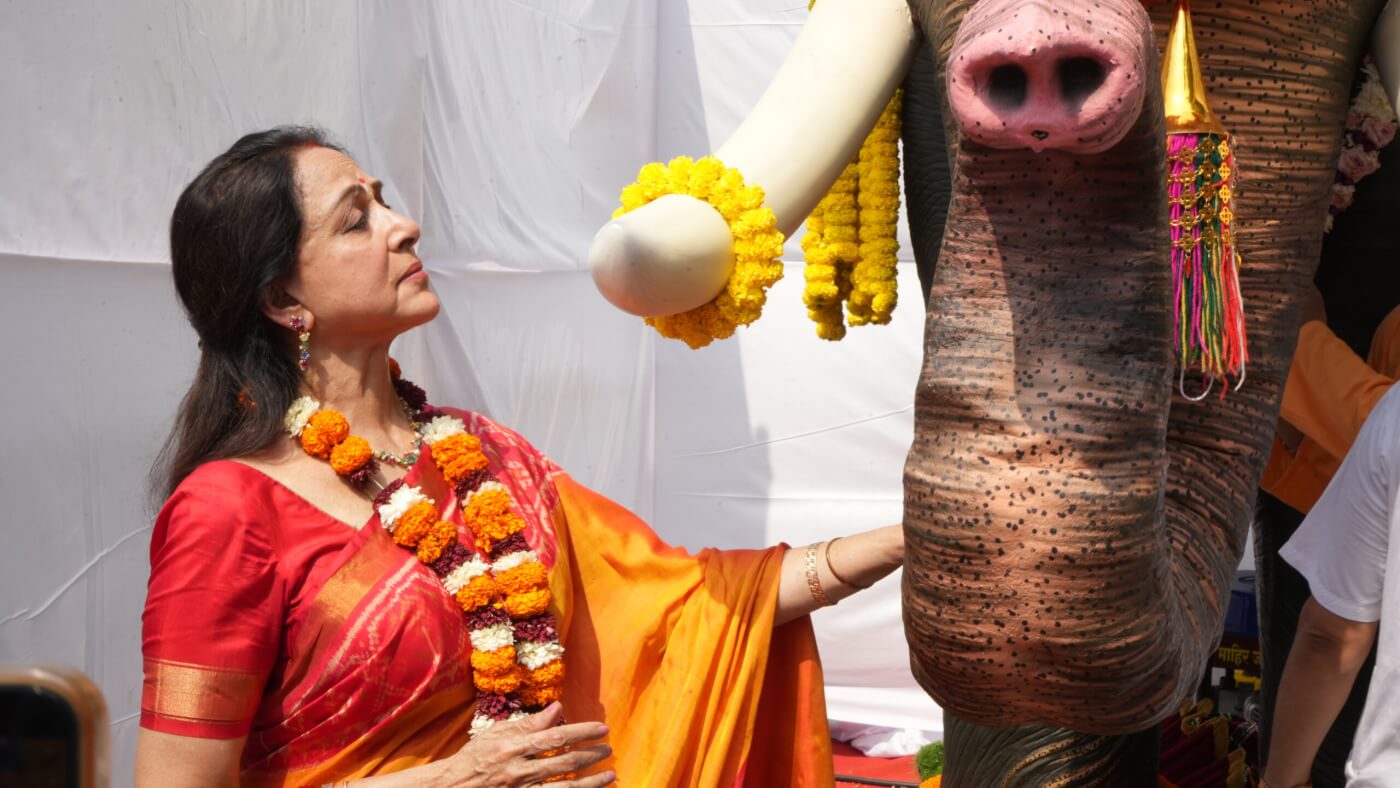
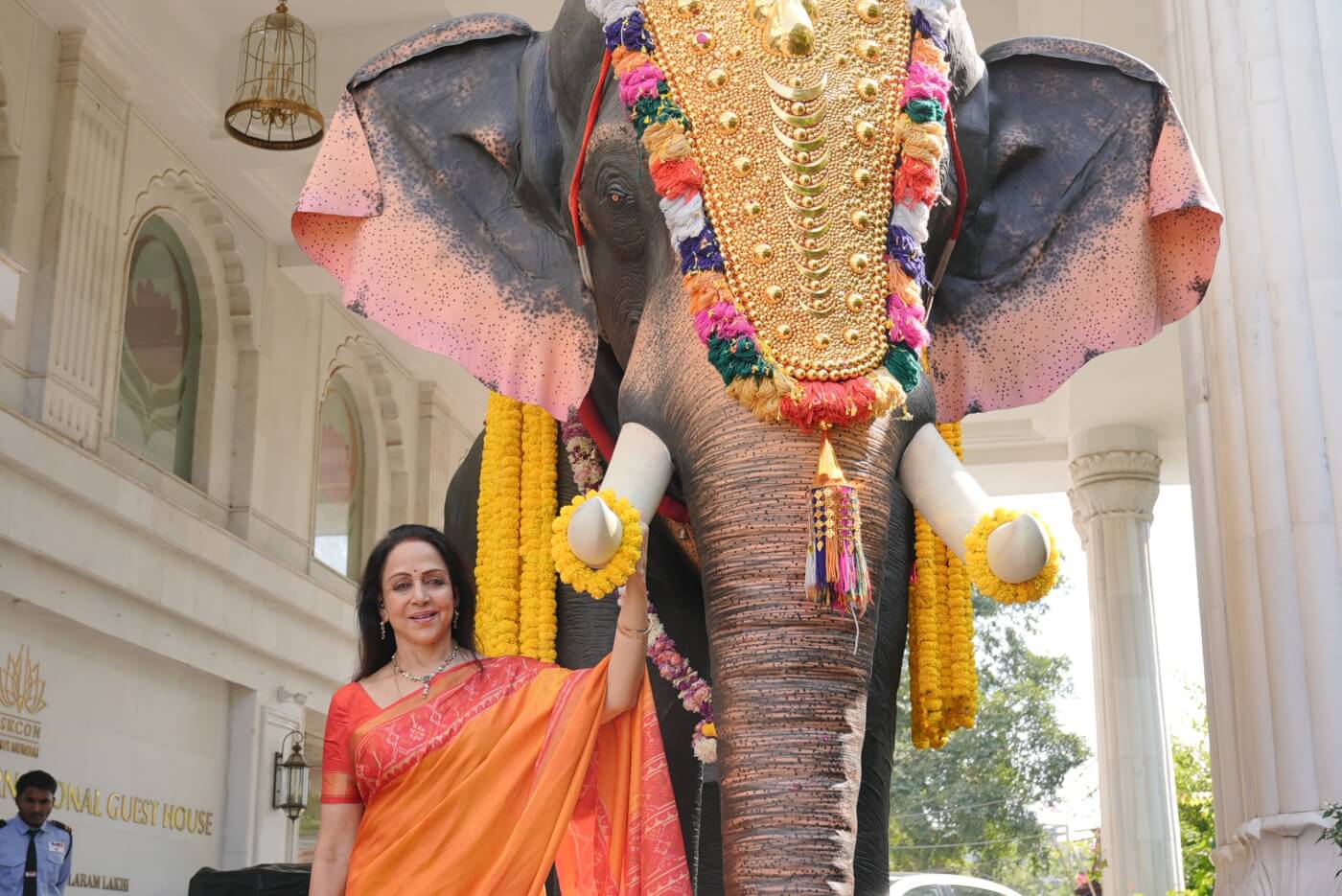
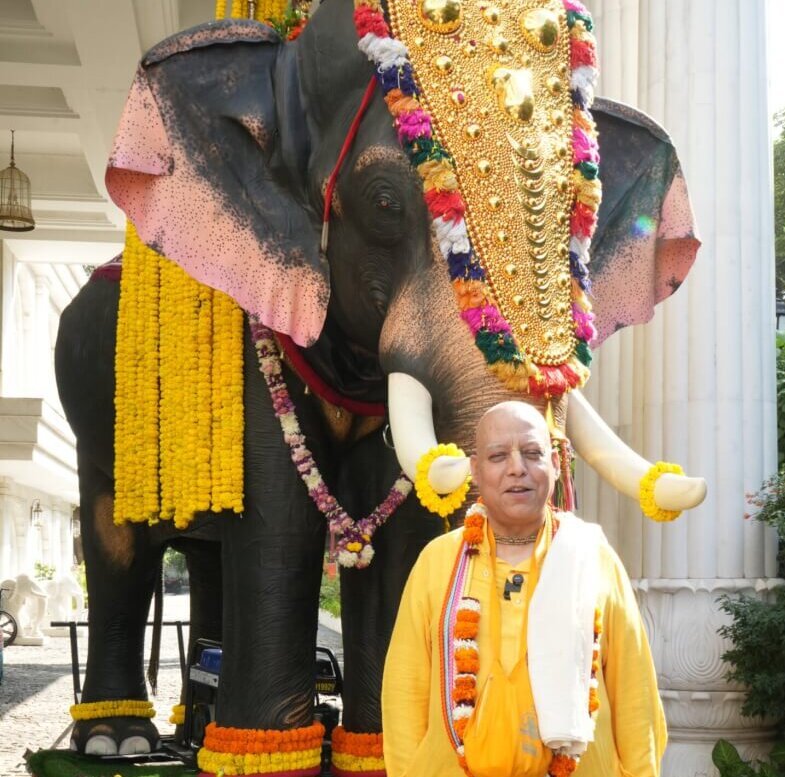
PETA India ignited the sympathetic movement to replace the use of live elephants by religious institutions with mechanical ones at the beginning of 2023. Now, at least twenty mechanical elephants are used in temples across India. PETA India has donated sixteen with stars, including some with NGO Compassion Unlimited Plus Action (CUPA), to recognise temples’ decisions to never own or hire live elephants. PETA India has also offered a mechanical elephant for use in a Muharram procession to replace the use of a real elephant, but the offer has yet to be taken up.
Teaching Empathy to Schools Through Asia’s First Animatronic Elephant
Another unique initiative by PETA India has been teaching children kindness and empathy towards elephants with the help of Ellie, Asia’s first animatronic empathy-building elephant voiced by actor Dia Mirza. So far, Ellie has been welcomed by 280 schools. There, she tells children a story of being taken away from her family to perform unnatural tricks in circuses.
Inspired?

