

‘Animals’ Feast on a ‘Human’ as Tables Turn for International Meatless Day Street Theatre by PETA India
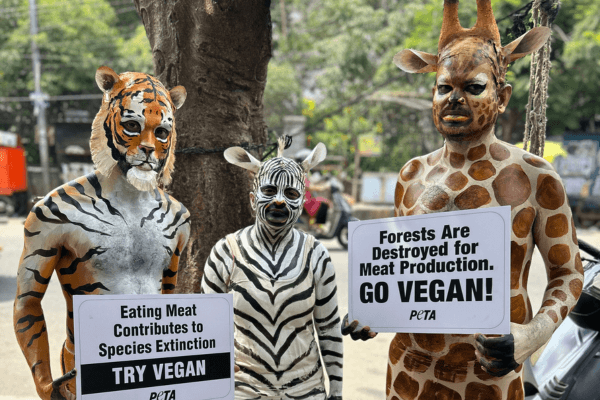
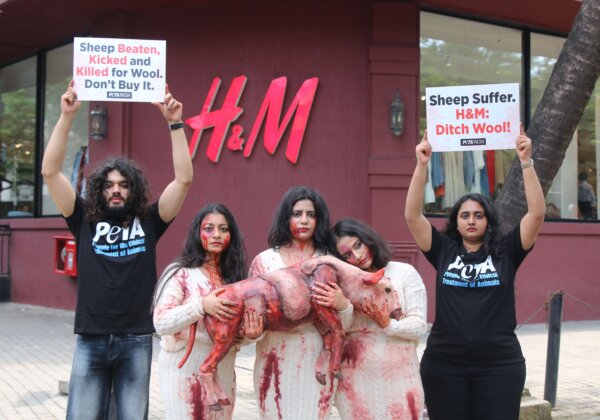
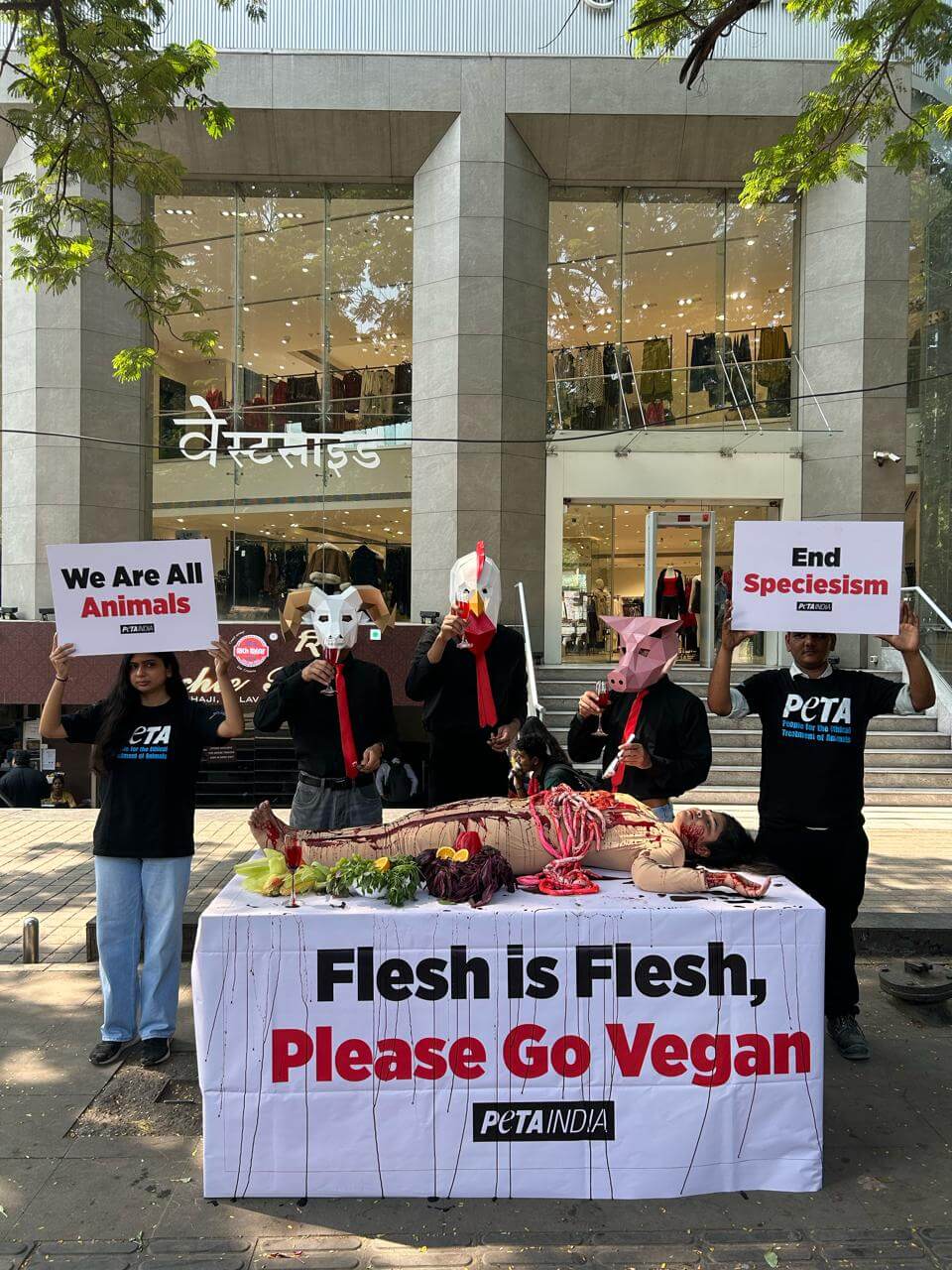
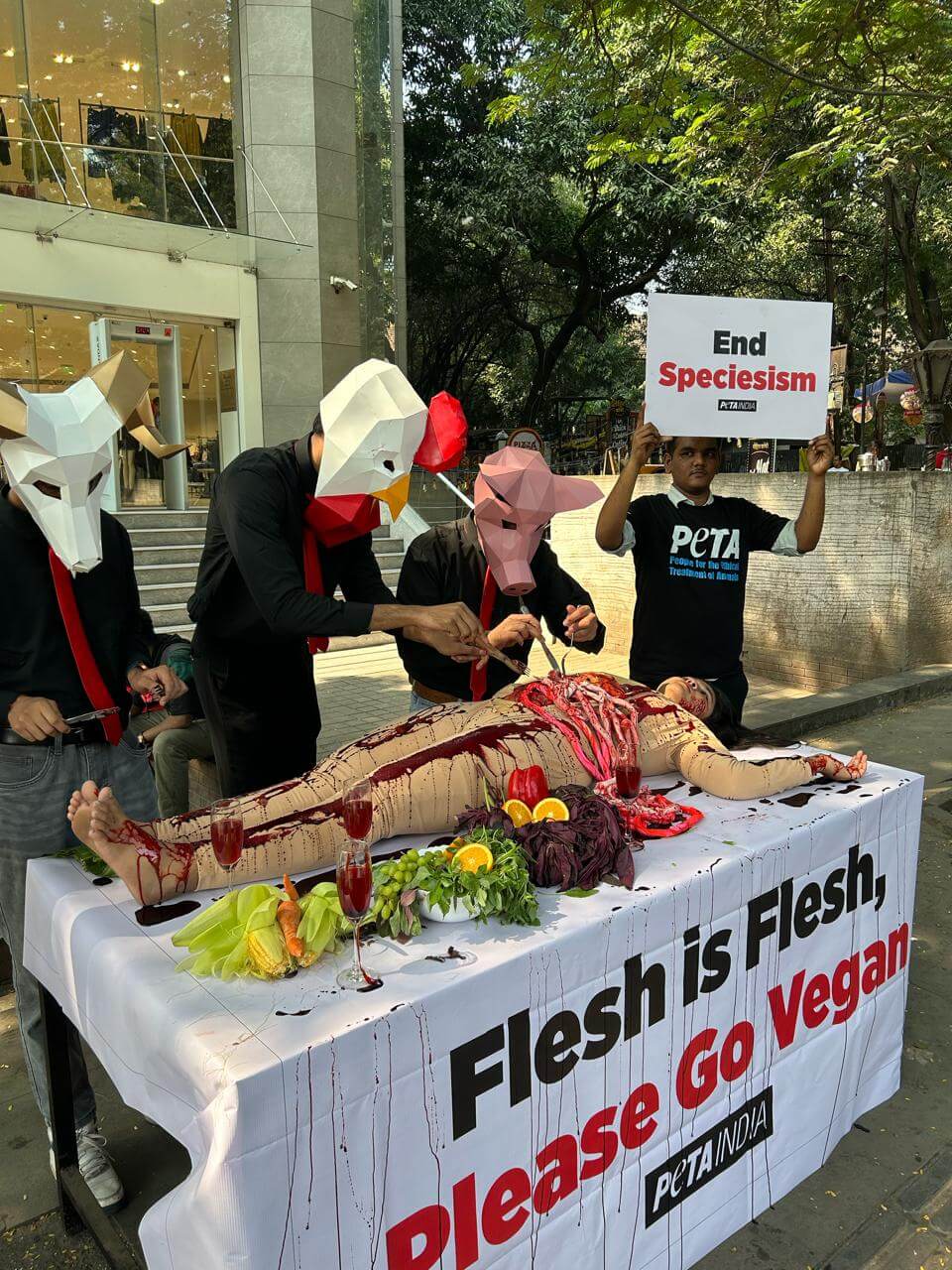
Ahead of International Meatless Day (25 November), to give passers-by food for thought, PETA India supporters wearing chicken, goat, and pig masks “dined” on a “human” lying bloodied on a table with a banner that read “Flesh Is Flesh, Please Go Vegan”. The street-theatre was part of PETA India’s efforts to encourage everyone to embrace delicious traditional vegan meals and consider that animals, like humans, feel pain, fear, joy and a desire to live.
Young Indians are at the forefront of PETA India’s efforts. According to a 2026 YouGov & India Karuna Collaborative survey of Indians aged 18–30, 70% recognise that animals such as cows, goats, and chickens can experience pain, fear, and discomfort, while 54% rate animal welfare as “very” or “extremely” important when buying products.
Interest in vegan (meat and dairy-free) eating is skyrocketing in India over animal rights, environmental and health concerns, particularly among Gen Z. According to research by global market research company Ipsos and the Plant Based Foods Industry Association (PBFIA), India’s vegan food industry could reach Rs 5,500 crore by 2034. The research also found that 78% of Gen Z consumers surveyed believe vegan diets promote good health, 75% believe vegan foods reduce their environmental impact, and 69% believe vegan diets help prevent cruelty to animals.
Chickens have a complex language, pigs dream, cows mourn separation from their companions, goats are curious, and fish engage in play. Yet, as documented in PETA India’s widely publicised video exposé “Glass Walls“, in today’s western-style factory farms, chickens are confined by the thousands to severely crowded sheds filled with ammonia fumes from accumulated waste and deprived of everything natural and important to them. These chickens and other animals are crammed into slaughterhouse-bound vehicles, where many sustain broken bones, get crushed or suffocate. At slaughterhouses, workers often use blunt blades to cut the throats of goats, sheep, and other animals, while fish are left to suffocate or are gutted alive.
Today, India has the largest meat-free population in the world, while 10% of Indians identify as vegan. Everyone who goes vegan spares up to nearly 200 animals every year, reduces their carbon footprint from food up to 73%, and lowers their risk of obesity, heart disease, diabetes, and certain cancers.
Inspired?