
AFTER ELEPHANT RUNS AMOK AT SHIVAMOGGA DASARA, PETA INDIA OFFERS FLEET OF MECHANICAL ELEPHANTS TO KARNATAKA TO REPLACE LIVE ELEPHANTS
Following the terrifying incident dated 21 October 2026, at Shivamogga Dasara, in which an elephant panicked and ran amok, reportedly injuring his mahout, damaging vehicles, and sending spectators fleeing, PETA India has written to Karnataka Minister for Forest, Ecology and Environment Shri Ramalinga Reddy, urging him to make this the last Dasara using live elephants. PETA India has offered to help provide a fleet of life-size mechanical elephants for future Dasara celebrations across the state and has urged that captive elephants be sent to sanctuaries to live unchained, without weapons, and in the company of other elephants. Karnataka is already leading this compassionate transition. Just yesterday, PETA India and Compassion Unlimited Plus Action (CUPA) donated a life-size mechanical elephant named Shivayogiswara to DMS Chandravana Ashrama in Mandya. Unveiled during its Banni Puja celebrations, Shivayogiswara demonstrated how cherished Dasara traditions can be celebrated safely and respectfully.
Mechanical Elephant, Shivayogiswara, donated by PETA India and CUPA to DMS Chandravana Ashrama in Mandya
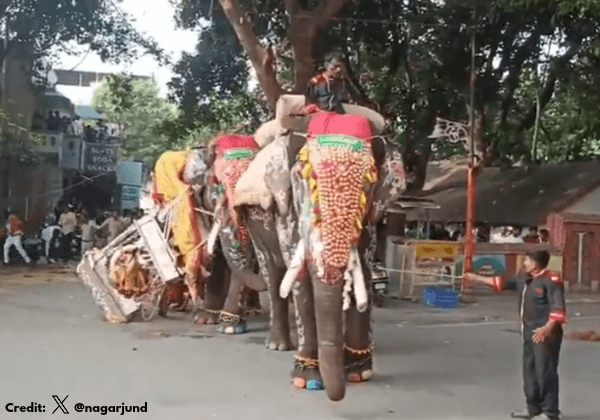
During the 21 October procession involving live elephant Somanna, who was reportedly carrying the 650-kg howdah bearing the idol of Goddess Chamundeshwari for the first time after the elephant who usually carries it was withdrawn with a leg injury, Somanna reportedly panicked and ran amok. The howdah fell, vehicles were damaged, and his mahout was reportedly injured in the mayhem.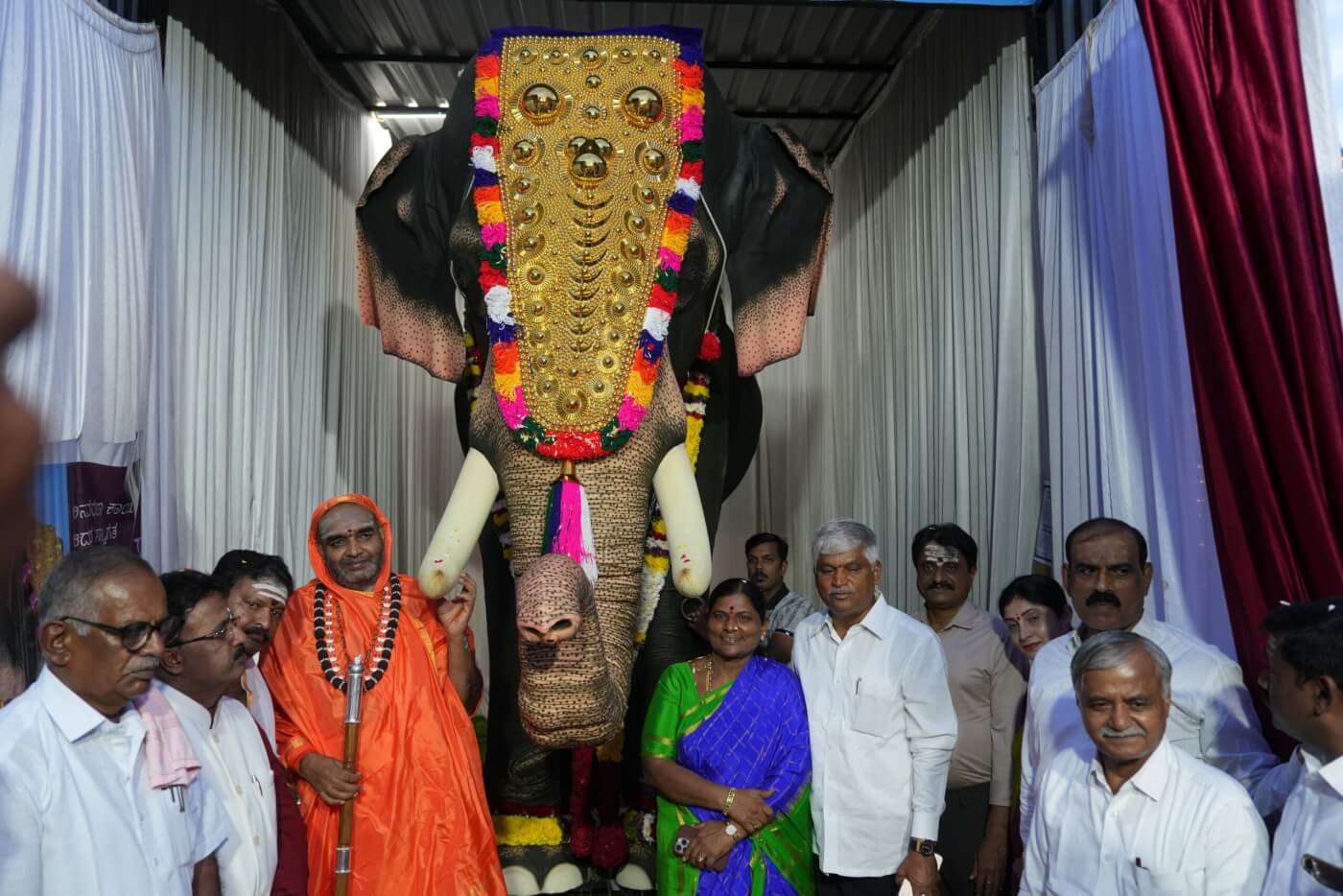
The incident is the latest in a series of alarming events involving Dasara elephants in Karnataka. In September 2024, elephants Dhananjaya and Kanjan fought inside the Mysuru Palace grounds, causing Kanjan to flee onto a busy road as onlookers ran for safety. Earlier this year, the dangers turned deadly when the same Kanjan fought with another captive elephant, Marthanda, at Dubare Elephant Camp in Kodagu. During the confrontation, a woman tourist was crushed to death, and Marthanda died from his injuries the following day.
In October 2021, elephant Gopalaswamy panicked during Srirangapatna Dasara after being startled by firecrackers, sending spectators fleeing. Organisers cancelled the elephant procession and instead carried the idol of Goddess Chamundeshwari on a silver chariot, demonstrating that cherished traditions can continue without using live elephants.
PETA India’s investigations into the training and use of elephants for Mysuru Dasara have documented elephants being chained, struck, and jabbed with ankushes (weapons with sharp metal hooks) and sticks during rehearsals and the procession. Elephants were also subjected to the loud bangs of cannon-fire training. Elephants are intelligent, highly social wild animals who suffer when chained, transported, intimidated, and placed in chaotic, noisy public events. Frightened or frustrated elephants can also become dangerous to themselves and others.
Mechanical elephants, which can move their heads, ears, eyes, trunks, and tails, are mounted on wheeled bases and can carry ceremonial idols in processions and rituals without causing suffering to living elephants or endangering devotees, mahouts, police officers, and other members of the public.
The latest mechanical elephant donation marks the 11th mechanical elephant facilitated by PETA India and CUPA in Karnataka and the 1st in Srirangapatnam. In September 2024, mechanical elephant Niranjana was introduced at the Yedeyur Sri Siddalingeshwara Swamy Temple, the first at a Muzrai temple, leading the way for innovation in preserving cultural traditions while enabling safe, animal-friendly festivals and rituals.