

Two Caged Parakeets Rescued from Deplorable Conditions in Dahisar East Following PETA India Complaint, Wildlife Offence Registered
After receiving a concerned citizen’s report that two rose-ringed parakeets were confined in deplorable conditions in a cage outside a residence in Dahisar East, PETA India immediately alerted the Thane Forest Division of the Maharashtra Forest Department. Acting on the complaint, Shri Sachin Repal, IFS, Deputy Conservator of Forests (DCF), Thane, Shri Santosh Dagale, Range Forest Officer, Mumbai Range and other forest officials raided the property and rescued both parakeets, and subsequently registered a Preliminary Offence Report (POR) for illegally capturing and unlawfully keeping the protected birds.

The two parakeets were found crammed together in a small, rusted wire cage in a cluttered, partially covered space outside the residence. Both birds had significant feather loss across their chests, bodies and wings. Feather loss like this is commonly linked to feather-plucking, a behaviour that captive birds develop under extreme stress. They underwent veterinary examinations following their rescue and are currently under observation at the Thane forest division’s temporary transit centre.
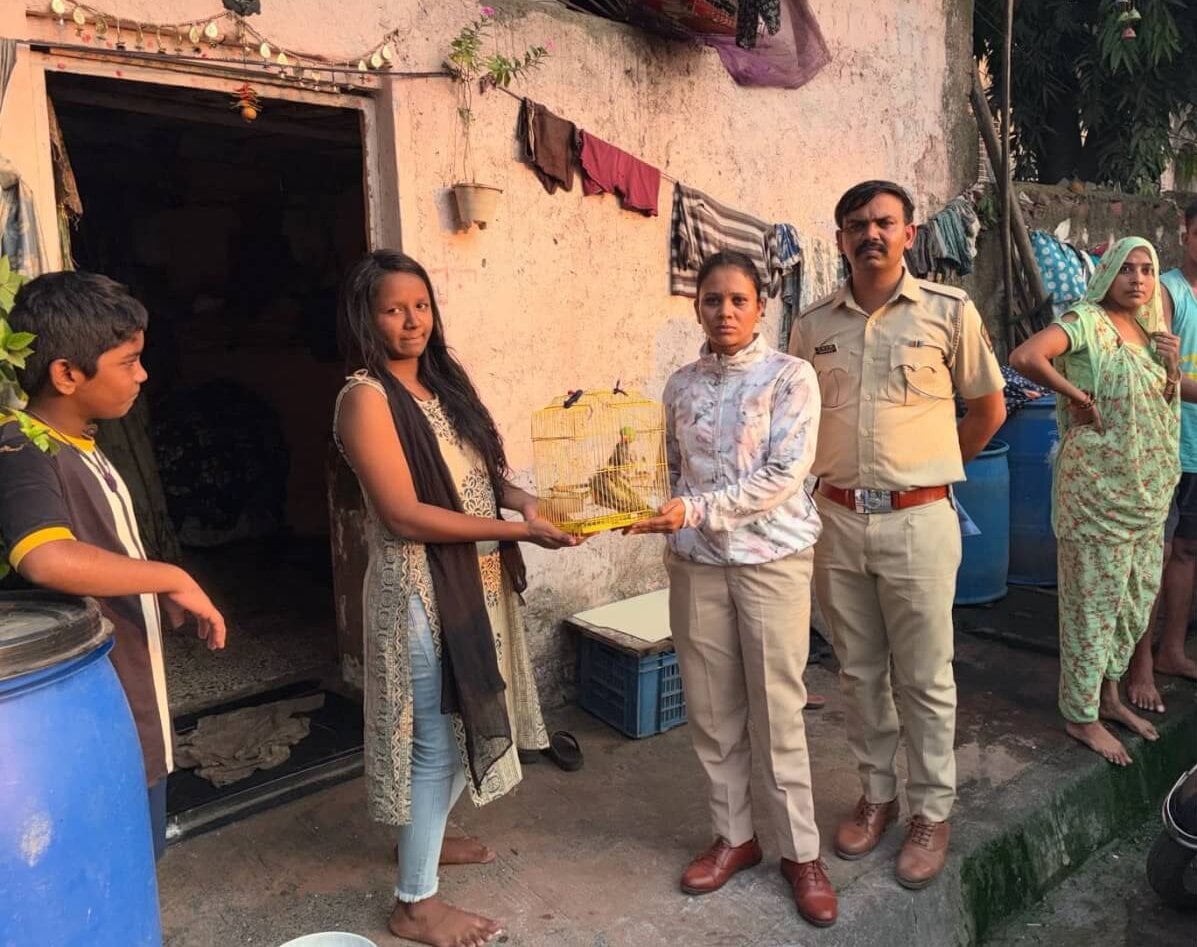
Rose-ringed parakeets are protected under Schedule II of the Wildlife Protection Act (WPA), 1972. Illegally capturing or possessing these birds can be punishable by a fine of up to Rs 1 lakh, a jail term of up to 3 years, or both.
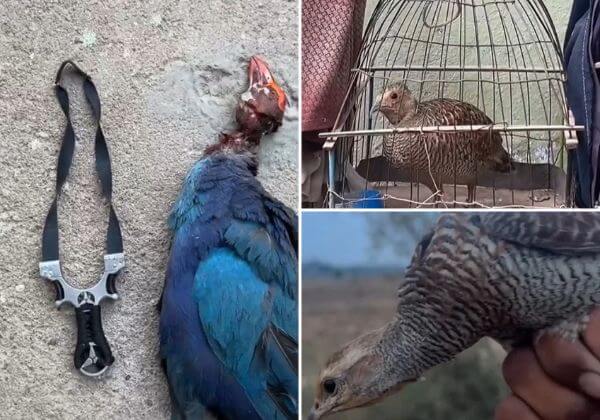
In the bird trade, countless birds are taken from their families and denied everything natural and important to them so that they can be sold as pets or used as bogus fortune-tellers. Fledglings are often snatched from their nests, and others panic as they’re caught in traps or nets that can seriously injure or kill them as they struggle to break free. The mortality rate of captured birds is thought to reach as high as 80%, especially as many of them die in transit from broken wings and legs, thirst, or sheer panic. Those who survive face a bleak life in captivity, suffering from malnutrition, loneliness, depression, and stress.
The WPA, 1972, prohibits the capture, possession, and trade of protected indigenous birds and that non-compliance can result in imprisonment, a fine, or both. In addition, confining birds in cages that deny them a reasonable opportunity for movement violates the Prevention of Cruelty to Animals Act, 1960, which prohibits such confinement under Section 11(1)(e) – a particular concern for birds, whose natural movement includes flight.