
What Happens to Cows?
Down on the Dairy Farm
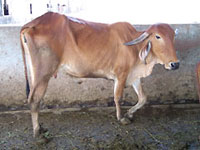
Many cows and buffaloes on dairy farms have been genetically manipulated to have huge udders so that they will produce much more milk than they would naturally. To further boost production, farmers inject the animals with synthetic growth hormones, which increases their risk of developing mastitis, a painful infection of the udder. Some farmers in India illegally inject cows with oxytocin, a powerful prescription narcotic that causes cows to produce more milk. This drug can make humans very sick. In villages, farmers often practise “phukan”, in which a stick is rammed into a cow’s uterus and twisted, causing her intense pain and sometimes internal ulcerations that can become badly infected.
Cows kept for their milk are genetically manipulated to produce much more milk than they would naturally. Their swollen udders often become infected, causing blood and pus to seep into their milk.
Cows and buffaloes produce milk for the same reason that humans do: to nourish their babies. Their babies are taken away from them shortly after birth, which traumatises and distresses both mother and calf. Female calves are added to the dairy herd or are slaughtered for the rennet in their stomachs, which is used to make cheese. Sometimes the baby cows are killed for their flesh shortly after they are born – otherwise, they are used for their milk or killed for meat or leather when they are older. When their milk production wanes after a few years, the mother cows are killed, and their flesh and skin is sold.
What Happens to Cattle?
With more than 186 million cattle, India has more of these animals than any other country. Cattle and buffaloes raised for beef in India spend most of their lives in extremely crowded fenced-in areas, where they are crammed together so tightly that they have no room to graze. Steers undergo painful procedures such as branding, castration and dehorning without any painkillers. odies are cut apart.
What They Do Not Tell You About Cows
Cows are as diverse as people – some are bold and adventurous, and some are shy and timid. Some are friendly and considerate; others are bossy and devious. They have been known to perform impressive feats, such as leaping over a 1.8-meter fence to escape from an abattoir, walking 11 kilometres to be reunited with a calf, and swimming across a river to freedom. They form strong friendships and develop social hierarchies among their own relatives as well as with unrelated friends and their offspring. Read more.