
Written by PETA
You've seen us win campaigns, admired our stunning celebrity ads, taken notice of our eye-catching demonstrations on the streets, watched our hard-hitting undercover investigations, listened to our campaigners talk about animal rights issues on TV and taken action with us online, but have you ever met the person behind all this work? Today, 8 March, is International Women's Day, so we thought it was the perfect occasion to introduce the woman behind our success: Meet Poorva Joshipura!
Born in the US, Poorva has proved her commitment towards helping animals by working for various PETA affiliates globally before becoming our dynamic Chief Executive Officer. Poorva is also the Vice President of International Affairs for PETA UK, which makes her the youngest vice president of any PETA affiliates.
Poorva's known for her bold campaigning style. She has personally conducted numerous undercover investigations of slaughterhouses and other facilities in which animals are abused in India, has confined herself to a cage in Nairobi to demonstrate the plight of chickens killed for their flesh and successfully stopped a US-based animal supplier to laboratories from expanding its business to Europe, among other achievements. She was even jailed for disrupting a Michael Kors fashion show during New York Fashion Week to protest against his use of fur.
Read on to learn what Poorva's got to say:
How did you end up working for PETA?
For as long as I can remember, I've enjoyed learning about animals. I remember watching wildlife documentaries with my father when I was as young as 3, and I have fond memories of my grandmother as she set out water for birds and squirrels. But when I was young, I ate meat, I wore leather, I used products tested on animals and I went to the zoo and the circus. Although I respected animals, because the use of animals is so entrenched in our society, I did not realise that my daily actions caused a lifetime of suffering and cruelty to animals. That is, until I met a girl in school named Natalie. We became good friends, and she introduced me to literature from PETA US. I vowed never to knowingly harm animals again after reading their Animal Times magazine and decided to go vegan. Natalie now works for PETA Foundation US, while I am the Chief Executive Officer of PETA India.
What are the challenges that you have faced with being associated with PETA India?
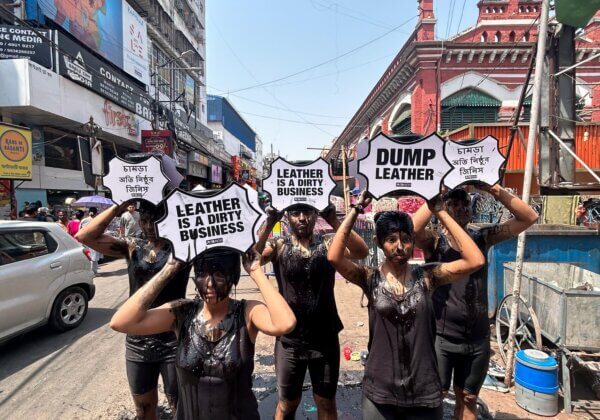
We don't have the big budget of large corporations to help us reach out to people, and the nature of our work is to expose cruelty so hideous that sometimes television networks refuse to air it. As a result, we need to be cutting edge. We rely on our own boldness and creativity to get animal issues noticed. We are not afraid of doing something unusual and often act as billboards ourselves through eye-catching street theatre–style demonstrations. We put animals first and leave personal hang-ups against doing something uncomfortable behind.
What is it that fires you up about animal rights?
We know a lot more today than we did in the past about animals. We know that they are thinking, feeling, emotional, sensitive beings – just as we are. This makes what we do as a society to animals for a fleeting moment of taste or for a belt or a shoe even more unacceptable.
Chickens, for example, are inquisitive and interesting animals whose cognitive abilities, scientists now tell us, are in some cases more advanced than those of cats, dogs and even some primates.
Fish and Fisheries cited more than 500 research papers on fish intelligence, proving that fish, too, are smart, that they can use tools and that they have impressive long-term memories and sophisticated social structures.
Cows are very intelligent animals who can remember things for a long time. Animal behaviourists have found that cows interact in socially complex ways, developing friendships over time and sometimes holding grudges against other cows (and people) who treat them badly.
What can people do to help animals?
Log on to PETAIndia.com to take part in action alerts. Volunteer at an animal shelter to take dogs for walks and to help them with adopt-a-thons. Set up an information stall at your college fests (PETA can provide you with materials). Arrange a screening of PETA's investigative videos. You can order a free copy of "Glass Walls", our video exposé of the cruelty of the meat and dairy industries, to show your family and friends. Share PETA's investigative videos online. Encourage people to become a member of PETA India. And most importantly, speak up whenever you see cruelty.
What keeps you going when you're not at work? What do you like doing in your free time?
I love hanging out with my rescued dog, Mr Mehboob. He was found near Mehboob Studios during a shoot with Celina Jaitly against cruelty to animals in laboratories, thus the name. We go for long walks along the Bandra seafront in Mumbai over the weekends. I love hanging out with family and friends, exploring and learning – by travelling, reading, watching films, trying new cuisines. I'm always up for a new adventure. My favourite, however, is to travel and meet people from different cultures. It's always good to have an opportunity to see life from a different perspective.
Veermata Jijabai Technological Institute (VJTI) teamed up with PETA Youth– the young division of PETA India – to hold a 6-kilometre run and a festival. The theme for both was the promotion of animal rights.
"We're thrilled to have partners as prestigious as VJTI", says Richa Mithal, PETA Youth's marketing coordinator. "The marathon gave us an opportunity to talk about animal rights on a personal level with many young people who want to get active for animals."
The intercollegiate marathon was held in January to urge the government to pass the Draft Animal Welfare Act, 2011, prepared by the Animal Welfare Board of India. Passage of the new law is vital because India's current penalties for cruelty to animals are badly outdated under The Prevention of Cruelty to Animals Act, 1960.
Students ran wearing petaDishoom (now PETA Youth) T-shirts, which were given to the first 100 entrants. The event was covered by Channel V and Saam TV.
Long before her hilarious and candid debut novel about a Pakistani-American family started making waves across the country, author Jabeen Akthar made waves with PETA US. Yep, that's right, we knew her first! A former "Tiger Lady" who bared her stripes in a PETA US circus protest, Jabeen is now a member of PETA US's Regulatory Testing Division. Recently, we sat down with our old pal to talk shop about her new book, her thoughts on animal rights and much more.
Tell us about your book.
Welcome to Americastan follows a young Pakistani-American named Samira Tanweer, who, through a series of misadventures, learns her name is on the FBI's terrorist watch list. After losing her job and losing her boyfriend to her best friend, Samira returns to her dysfunctional family in North Carolina to make sense of what happened to her life. The novel is a snapshot of life in the US for typical Pakistani-Americans. It addresses serious topics such as racism, assimilation, failure and generational differences, but in the end, I just hope it makes people laugh.
Do you also write about animal rights?
My involvement in animal rights is the most important aspect of who I am, so it will always find its way into my writing. There is a scene in Welcome to Americastan in which Samira goes to a party full of Muslims and criticizes the practice of slaughtering lambs during the Muslim festival of Eid. I've been asked repeatedly if Muslims are offended by this scene. On the contrary, lots of compassionate young Muslims have been thanking me for putting it out there.
Tell us about how you got involved with animal rights.
I've been around forever. I was a PETA US volunteer back when the organization had a single office in an old warehouse! It all started with a PETA US newsletter in the 1980s. There was a black and white photo of a cow on the ground, her eyes wide and terrified. She was a "downed" factory farm cow who had been kicked in the face, ribs and back repeatedly by farm workers. Not only was this story devastating to read, it also shook my entire worldview and marked the beginning of my journey to change how we view and treat animals. I shared the newsletter with my family, and we stopped eating meat overnight and never looked back.
What inspired you to go vegan?
In the 80s and early 90s, being a vegetarian animal rights activist was considered hardcore. The concept of veganism hadn't reached the mainstream. For many years, I was under the false impression that I was doing enough by not eating meat. I soon couldn't deny that I was contributing to the meat industry as much as any meat-eater by continuing to eat dairy products and eggs, so I rid my diet of those products altogether. It's awesome – I'm savings animals by being vegan, and my diet has never been more diverse and exciting. And going vegan is a downright blast – check out my new favorite vegan chef.
What do you do for PETA US, and what does the department you work for do?
As a former US government employee, I found the perfect home in PETA US's Regulatory Testing Division – a team of highly credentialed and dedicated scientists and researchers who push the US government as well as international organizations to develop and use incredibly effective and sophisticated non-animal testing methods in their testing programs. I manage research projects by helping the team navigate through complex federal regulations, help publish research articles in scientific journals, and generally keep the department running as smoothly as possible given the heavy workloads our scientists have.
What achievement are you most proud of in your work for animals?
So much of what we do for animals is teamwork, so I can't take credit for any one thing. Over the years, I've participated in numerous campaigns that closed fur stores, saved animals from painful and lethal experiments, and banned gestation crates for factory-farmed pigs. On a regular basis, I look out for injured wildlife on the roads and get them medical treatment, and I have rescued countless stray cats. Most importantly, by just showing people the video "Meet Your Meat" and fixing them yummy vegan meals, I've helped a lot of people go vegetarian and vegan!
What would you say are some of the most pressing issues regarding animal experimentation in India?
I'm pleased to see Indian educational bodies like the University Grants Commission and the Pharmacy Council of India finally embracing sophisticated non-animal teaching methods in the classrooms. No student should ever have to use an animal for dissection or research when there are so many alternatives available. In the US, some states even have laws protecting the rights of students who refuse to dissect. It's also time to see cosmetics testing on animals banned in India – something we've already seen happen in the European Union. With India's booming economy and growing presence on the world stage, there's no reason it should fall behind the West in moving away from animal experimentation and toward cheaper, more efficient and humane methods.
Anything else you'd like to add?
I knew a girl in college who constantly debated my views on animal rights and said my activism was a waste of time. Fifteen years later, I see her running toward me at an animal rights conference with a T-shirt that says, "Vegan," and she tells me I'm the reason she's there. I'm still not sure what I ever did or said to make her change her mind, but the bottom line is this: you never know whom you're encouraging to help animals, so don't give up on anyone!
Written by Kriti-S
With Children's Day just around the corner, we'd like to give you a chance to win a great book on animals for your little one.
PETA founder Ingrid E Newkirk's book 50 Awesome Ways Kids Can Help Animals: Fun and Easy Ways to Be a Kind Kid is packed with fascinating facts about animals and fun quizzes, riddles and activities that will inspire your child to put down that play station and get busy helping animals!
All you need to do to enter the contest is comment below and provide an idea for how kids can help animals. The three people deemed to have the most interesting and useful ideas will be chosen by PETA as our winners.
The contest ends on 14 November 2011. The winners will be notified by 15 November. No purchase necessary and void where prohibited by law. By entering the contest, you are agreeing to our terms and conditions and privacy policy.
Recently, a phone call from Chennai brought tremendous sadness to our office. We learned that Prem Kumar, an enthusiastic PETA supporter and volunteer, passed away at the young age of 22.
Prem was passionately involved with organising demonstrations and petition drives and helping wherever and whenever animals needed him. Most recently, he helped our Chief Functionary, Poorva Joshipura, and Campaign Coordinator, Bhuvaneshwari Gupta, organise a news conference highlighting PETA's case in the Supreme Court against the Tamil Nadu Regulation of Jallikattu Act No 27 of 2009, a Tamil Nadu state law that permits Jallikattu, pointing out that this cruel event both violates the spirit of the national Prevention of Cruelty to Animals Act, 1960, and causes numerous human injuries and deaths every year to human participants and spectators. You can read about this campaign, which was dear to Prem's heart, here.
Here we are sharing a few pictures of Prem in action. We hope these photographs will inspire others to help animals in the way that Prem so lovingly did.
All of us at PETA extend our deepest condolences to Prem's family and friends.